How to Reduce Deck Railing Material Waste: Efficiency Guide
Optimizing material usage during outdoor platform construction demands disciplined linear estimation, precise spatial geometry, and methodical job-site material management. Guardrail systems consist of repeated structural modules, including vertical support posts, top handrails, bottom tracks, and intermediate infill balusters. How to Reduce Deck Railing Material Waste. When builders order stock lumber or composite extrusions without analyzing section spans, off-cut waste accumulates rapidly along job-site scrap piles. Disposable short cutoffs represent lost financial capital and unnecessary environmental waste.
Reducing material scrap requires shifting focus from simple square-footage estimation to linear cut-nesting logic. Standard lumber yards supply structural timber in fixed two-foot increments, ranging from eight to sixteen feet in length. Designing guardrail post spacing to match standard mill lengths minimizes unusable short off-cuts. When post layouts divide evenly into commercial board lengths, every purchased foot of material serves a structural purpose.
Material conservation extends beyond initial lumber ordering into job-site execution workflows, tool setup, and off-cut re-use strategies. Precision cutting equipment, detailed cut lists, and organized material staging prevent accidental miscuts that destroy valuable stock. Analyzing material dynamics enables builders to minimize waste, lower project expenses, and preserve structural integrity across elevated residential platforms.
Understanding “how to reduce deck railing material waste”
Linear Cut Nesting and Layout Geometry
Learning how to reduce deck railing material waste requires evaluating linear cut nesting, module symmetry, and board yield math rather than relying on surface square-footage estimates. Outward lateral forces require solid post placement, but inefficient post spacing creates unusable off-cuts.
When builders set post spacing without reviewing commercial board lengths, expensive off-cuts accumulate along job-site scrap piles. Designing rail spans to divide evenly into standard board sizes eliminates discarded short ends.
Structural Codes and Material Yield Constraints
Building codes require perimeter guardrails to support 200-pound concentrated forces while maintaining baluster gaps under four inches. Achieving strict code compliance while minimizing material scrap requires balancing post spacing, infill yield, and handrail continuity.
Spacing posts at six-foot or eight-foot centers allows builders to maximize yield from twelve-foot and sixteen-foot commercial boards. Ordering pre-cut balusters or pre-assembled metal panels reduces field cutting errors that generate material scrap.
Substructure Alignment and Off-Cut Utilization
Managing loose off-cuts demands setting up systematic material staging areas and organized cutting workflows on job sites. Pressure-treated timber and composite extrusions expand and contract, making accurate first cuts essential for tight joint fits.
Reusing clean six-inch off-cuts for internal joist blocking or post backing plates repurposes scrap timber into functional framing strength. Establishing disciplined cut lists ensures every linear board foot delivers maximum value across residential platform builds.
Historical Evolution of Job-Site Material Efficiency Practices
Traditional Site-Built Timber Framing
Historically, residential deck railings were constructed using dimensioned pressure-treated timber cut entirely on site. Carpenters measured spans manually, cutting top rails, bottom tracks, and vertical pickets from long random-length lumber stock.
High material availability and low timber costs encouraged loose estimation habits, resulting in massive job-site scrap piles. Unused short off-cuts were frequently discarded into burn piles or municipal landfills without structural re-use planning.
Introduction of Pre-Engineered Kits and Synthetic Lumber
The development of composite decking and capped vinyl extrusions introduced higher material unit costs to residential construction projects. Synthetic composite boards cost significantly more per linear foot than standard pressure-treated pine, making job-site material waste financially costly.
Manufacturers responded by producing pre-engineered railing kits featuring standard six-foot and eight-foot prefabricated panels. These pre-drilled systems simplified job-site assembly, reduced cutting errors, and established consistent material yields across residential installations.
Digital Cut Optimization and Factory Prefabrication
Modern deck construction utilizes digital layout software and computerized cut-nesting algorithms to calculate precise board yields before purchasing materials. Advanced estimation programs analyze complex deck perimeters, generating optimized cut lists that minimize remnant scrap.
Off-site factory prefabrication now supplies custom-cut aluminum panels and pre-tensioned cable assemblies directly to job sites. Today, achieving minimal material waste requires combining digital layout planning with disciplined job-site material management.
Linear Cut Nesting, Spatial Layout Geometry, and Yield Dynamics
Spatial Geometry and Board Length Matching
Designing guardrail post centers to match standard commercial board lengths maximizes linear material yield during framing setup.
A 24-foot deck perimeter divided into three 8-foot rail sections utilizes three 16-foot boards with zero linear scrap.
Dividing the same 24-foot perimeter into five 4.8-foot sections generates multiple unusable off-cuts from standard commercial stock.
Kerf Width Allowance and Multi-Cut Creep
Repeated saw cuts remove material width equal to blade thickness, creating accumulative length loss across multiple cuts.
A standard miter saw blade removes 1/8-inch of material per cut, consuming a full inch across eight baluster cuts.
Ignoring kerf width when planning nested cut lists causes final board segments to fall short of required safety dimensions.
Structural Blocking Integration
Repurposing clean short lumber off-cuts for internal substructure reinforcement turns potential waste into structural support.
Off-cuts measuring 12 to 14 inches function perfectly as solid joist blocking behind post attachment points.
Integrating off-cut blocking into framing workflows eliminates the need to cut fresh commercial boards for internal support.
Guardrail System Categories, Material Types, and Yield Dynamics
Site-Cut Pressure-Treated Pine Systems
Traditional pressure-treated wood railings offer total job-site flexibility, allowing custom rail spans across irregular deck perimeters. However, wood exhibits natural defects like knots, splits, and cupping that force installers to discard damaged board sections.
Selecting premium-grade timber reduces defect cutouts, improving overall linear board yield during assembly. Off-cuts from wood railings can easily be repurposed for internal joist blocking, post backing plates, or stair risers.
Prefabricated Powder-Coated Aluminum Systems
Modular aluminum railing systems feature factory-finished top and bottom rails containing pre-punched baluster slots. These systems yield minimal field waste when installed along straight deck perimeters matching standard panel lengths.
Cutting aluminum extrusions requires specialized fine-tooth carbide blades to prevent metal burrs and surface powder-coat chipping. Aluminum scrap cannot be repurposed as internal framing, but clean off-cuts are fully recyclable at metal processing facilities.
Custom Composite and Stainless Cable Infill Systems
Hybrid cable systems utilize capped composite post sleeves combined with horizontal stainless steel cable runs. Stainless steel cable spooling allows continuous threading through intermediate posts, reducing cable trimming scrap to minimal end snips.
However, composite post sleeves and top cap rails carry high linear foot costs, making cutting errors expensive. Careful measurement of post sleeve heights prevents ruining costly composite sleeves during field trimming steps.
Material Yield and Waste Dynamics Comparison
| System Material Profile | Typical Waste Percentage | Primary Scrap Source | Reusability of Scrap | Recyclability Potential |
| Site-Cut Pressure-Treated Pine | 12% to 18% | Defects & Remnant Ends | High (Internal Blocking) | Low (Treated Wood) |
| Modular Aluminum Panels | 3% to 7% | Trimmed Panel Ends | Low (Non-Structural) | High (Scrap Recycling) |
| Composite Rails + Cable Infill | 5% to 10% | Sleeve & Rail Trimmings | Low (Cosmetic Only) | Moderate (Composite) |
| Vinyl Sleeves + Metal Balusters | 8% to 12% | Off-Cut Rail Ends | Minimal | High (Clean Vinyl) |
Decision Logic for Waste Reduction
Minimizing railing scrap requires matching system selection with deck geometry, installer skill, and scrap re-use capability.
Rectilinear Perimeter Layouts with Uniform Spans
-
Space perimeter support posts on exact six-foot or eight-foot centers to match commercial panel lengths.
-
Order pre-engineered aluminum or composite rail kits matching planned post centers to eliminate field rail cutting.
-
Use pre-assembled baluster panels to speed up job-site assembly and eliminate individual baluster trimming.
Complex Multi-Angle Perimeters with Custom Spans
-
Purchase pressure-treated pine or cedar in sixteen-foot long boards to maximize cut-nesting flexibility.
-
Generate digital cut-nesting lists before making initial saw cuts, matching short rail sections with longer remnants.
-
Set aside all clean board off-cuts over twelve inches long for immediate use as internal joist blocking.
High-Budget Cable Railing Installations
-
Purchase bulk stainless steel cable spools rather than pre-cut cable lengths to eliminate fixed length trimming scrap.
-
Measure composite post sleeve heights twice before making single square cuts with high-tooth saw blades.
-
Thread continuous cable runs through intermediate posts, reducing end-fitting swage trims and cable scrap.
Detailed Real-World Scenarios and Structural Adaptation How to Reduce Deck Railing Material Waste
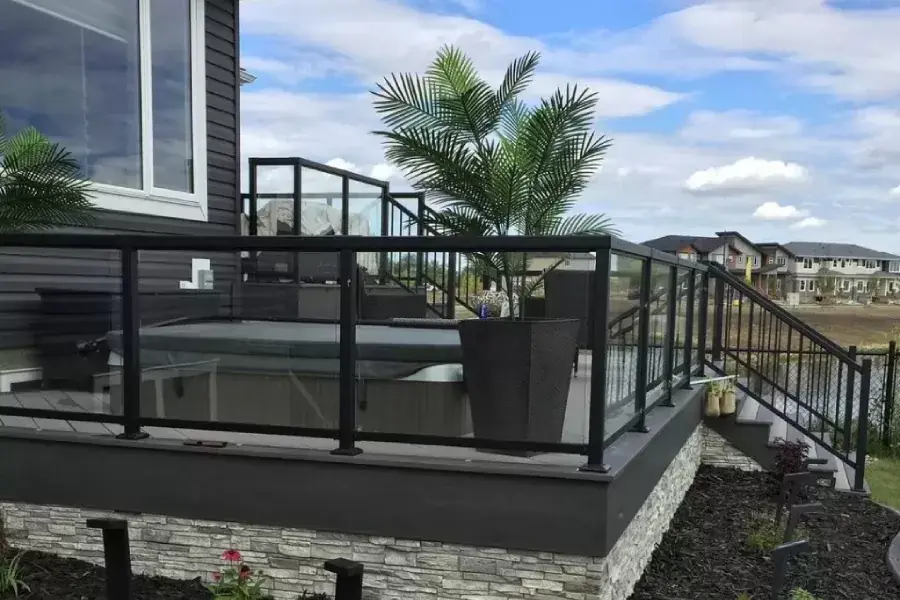
Scenario 1: Mis-Spaced Posts on Long Perimeter
A builder installs support posts along a 30-foot deck edge at irregular 5.5-foot intervals without reviewing commercial board lengths. Buying twelve-foot top rail stock leaves 1.0-foot unusable scrap ends from every board, generating over 15% linear scrap.
The builder corrects the layout by re-spacing posts to uniform six-foot centers across the 30-foot run. Ordering twelve-foot boards allows each board to yield exactly two complete six-foot top rails with zero linear waste.
Scenario 2: High Defect Losses in Low-Grade Pine
A DIY installer purchases low-grade pressure-treated pine boards to build a 40-foot wood railing system. Severe end-splits, heavy warping, and large loose knots force the installer to cut out damaged sections, wasting 22% of total stock.
The installer switches to premium grade select timber, which features tight grain structure and minimal defects. Although premium boards cost 20% more upfront, high board yield lowers total board footage requirements and eliminates scrap.
Scenario 3: Aluminum Panel Trimming on Irregular Deck
A contractor installs modular aluminum railing panels on an angle-corner deck featuring irregular 4-foot and 5-foot section spans. Buying standard 8-foot aluminum kits leaves 3-foot and 4-foot trimmed rail off-cuts that cannot span remaining post gaps.
The contractor collects clean aluminum off-cuts and transports them to a local metal recycling center. For future builds, the contractor orders custom-length panels directly from the manufacturer, reducing job-site cutting scrap.
Scenario 4: Cable Railing Trim Losses
An installer uses pre-cut cable assemblies for a multi-level deck featuring varying section lengths. Unused cable lengths on short runs require cutting off long excess stainless cable segments, wasting expensive pre-swaged fittings.
The installer shifts to bulk 500-foot cable spools and field-swaged end fittings for subsequent project phases. Unspooling exact cable lengths required for each run eliminates pre-cut cable waste and lowers material expenses.
Cost Dynamics, Scrap Valuation, and Resource Accounting
Direct Material and Scrap Valuation
Direct costs include structural timber, composite extrusions, metal panels, baluster packages, fasteners, and disposal fees. Linear material scrap represents direct financial loss, as discarded off-cuts carry the same unit price as installed material.
Disposing of pressure-treated lumber scrap incurs municipal landfill surcharges due to chemical treatment regulations. Minimizing job-site waste lowers both initial material purchasing budgets and secondary waste disposal expenses.
Labor Demands and Cut Optimization
Calculating complex cut-nesting lists and organizing job-site material staging requires initial planning time before cutting begins. However, disciplined material management prevents trips to supply yards to replace mis-cut stock.
Pre-engineered modular kits reduce cutting labor on site, enabling fast assembly while maintaining low waste rates. Investing time in accurate linear estimation lowers combined material and labor expenses.
Estimated Material Waste Financial Impact (100 Linear Foot Railing)
| System Material Execution | Total Material Purchase | Estimated Waste % | Scrap Financial Value | Disposal Expense |
| Unplanned Site-Cut Wood | $1,800 | 18% | $324 | $45 |
| Optimized Site-Cut Wood | $1,500 | 5% | $75 | $15 |
| Unplanned Custom Composite | $4,500 | 12% | $540 | $30 |
| Optimized Pre-Engineered Aluminum | $3,800 | 3% | $114 | $0 (Recycled) |
Optimization Software, Precision Tools, and Job-Site Workflows
Essential Waste Reduction Equipment
Equipping cutting stations with specialized measuring and cutting tools speeds up assembly while preventing costly material miscuts.
-
Linear Cut-Nesting Software: Calculates optimal cutting patterns from stock board lengths to minimize off-cut scrap.
-
Laser-Guided Compound Miter Saws: Delivers precise crosscuts on timber and composite rails, ensuring tight joint fits.
-
Stop-Block Measuring Tracks: Locks in repeatable cut lengths along saw benches, eliminating manual measuring errors on balusters.
-
High-Tooth Carbide Saw Blades: Cuts aluminum extrusions and composite sleeves cleanly without melting or chipping edges.
-
Digital Calipers and Angle Finders: Measures stair angles and sleeve thicknesses accurately to prevent custom trimming mistakes.
-
Organized Material Staging Racks: Separates full-length stock, usable off-cuts, and scrap pieces to prevent accidental re-cutting.
-
Portable Metal Shears: Trims stainless steel cable runs cleanly without fraying wire ends or damaging swage fittings.
Step-by-Step Material Management Workflows
Following organized job-site installation steps prevents material waste and ensures high linear board yields.
-
Verifying As-Built Perimeter Measurements: Measure actual installed post spans before unboxing or cutting rail materials.
-
Generating Master Cut Lists: Group identical rail lengths together, mapping cuts onto commercial board stock to maximize yield.
-
Setting Up Saw Bench Stop-Blocks: Lock stop-blocks onto saw tables when cutting multiple balusters to guarantee identical lengths.
-
Sorting Timber Stock by Grade: Reserve clear, straight timber boards for long top rails, using defective boards for short fills.
-
Cutting Longest Components First: Cut top handrails and bottom tracks before cutting shorter stair rails or secondary fills.
-
Staging Remnant Off-Cuts: Place off-cuts over twelve inches long on designated racks for immediate use as internal blocking.
Material Loss Taxonomy and Compounding Waste Drivers
Human Error and Measuring Mistakes
Mis-measuring post gaps or misreading tape measures remains a primary cause of destroyed rail stock on residential job sites. Cutting a high-cost composite rail one inch too short renders the entire board useless for that planned span.
Double-checking measurements against master cut lists before dropping saw blades prevents expensive miscuts. Establishing a “measure twice, cut once” discipline protects project budgets and reduces scrap generation.
Layout Geometry Inefficiencies
Securing perimeter railings without aligning post centers to standard commercial board lengths creates systemic material scrap:
Spacing posts at irregular 5.2-foot intervals forces installers to cut one short rail from an 8-foot board, discarding 2.8 feet of scrap.
Spacing posts on uniform 6.0-foot centers allows installers to yield two complete rails from a 12-foot board with zero linear scrap.
Poor Timber Grade Selection
Buying low-grade lumber containing large knots, sap pockets, and end-splits increases job-site material waste significantly. Installers must cut out non-structural defects, leaving numerous short off-cuts that cannot span post gaps.
Selecting premium-grade timber reduces defect cutout waste and speeds up installation workflows. Higher board yields offset initial grade price premiums while delivering cleaner visual finishes.
Improper Storage and Material Damage
Leaving raw lumber or composite boards flat on damp ground causes warping, twisting, and surface staining before installation. Damaged boards flex during cutting, resulting in out-of-square joints that fail structural assembly standards.
Storing materials elevated off the ground on level stickers and under protective covers prevents weather damage. Protecting stock on job sites ensures every purchased board remains usable for final construction.
Long-Term Governance, Material Audits, and Off-Cut Adaptation
Post-Project Material Yield Audit
Conducting material yield audits after project completion identifies waste sources and improves future construction estimation accuracy.
-
Total Purchased vs Installed Footage: Compare linear feet of purchased stock against total installed railing footage.
-
Off-Cut Remnant Bin Inventory: Measure linear feet of usable off-cuts remaining in job-site storage racks.
-
Defect Cutout Volume Audit: Measure scrap lumber generated from cutting out natural timber splits and knots.
-
Miscut Component Count: Track total components ruined by incorrect cuts or inaccurate measuring steps.
-
Recycled Metal Scrap Weight: Weigh aluminum or stainless steel off-cuts sent to local scrap metal recycling centers.
Scrap Adaptation and Re-Use Protocols
Establishing systematic off-cut adaptation protocols converts remaining job-site scrap into functional construction value.
-
Repurposing Timber Off-Cuts: Cut clean 2×4 and 2×6 wood off-cuts into solid joist blocking or post reinforcement plates.
-
Creating Stair Riser Cleats: Use short pressure-treated off-cuts to fabricate stair stringer cleats or step support blocks.
-
Sorting Metal Scrap for Recycling: Separate aluminum, stainless steel, and iron scrap into clean bins for recycling payout.
-
Donating Reusable Remnants: Donate full-length leftover composite boards or aluminum rails to local community building projects.
Material Efficiency Metrics, Yield Tracking, and Cutting Logs
Field Quality Control Checklist
Documenting material yield metrics tracks construction efficiency and identifies opportunities to reduce job-site waste.
-
Perimeter Post Center Verification: Confirm post spacing matches planned commercial board lengths before ordering stock.
-
Cut-Nesting Map Accuracy: Verify all rail cuts are mapped onto specific board stock lengths prior to cutting.
-
Saw Bench Stop-Block Engagement: Confirm stop-blocks are locked firmly for all multi-piece baluster cutting operations.
-
Off-Cut Staging Rack Usage: Ensure all clean off-cuts over twelve inches are staged visible to saw operators.
-
Material Storage Elevation: Confirm uninstalled lumber stock is elevated off wet ground on level stickers.
-
Defect Cutout Minimization: Verify timber defects are positioned within planned scrap zones rather than clear board spans.
Early Warning Signals vs Advanced Failure Indicators
Catching material management errors early prevents compounding board loss and budget overruns.
-
Leading Indicators (Early Warning Signs): Scrap pile growing faster than installed railing length, saw operators measuring cuts individually without stop-blocks, lumber warping on wet ground, and cut lists missing kerf width allowances. Addressing these signs early restores material yield control.
-
Lagging Indicators (Advanced Failure Signs): Running out of rail stock before perimeter completion, purchasing emergency replacement boards, discarding off-cuts over three feet long, and exceeding material waste budgets. Resolving these issues requires purchasing extra stock and reviewing estimation models.
Common Material Misconceptions and Estimation Oversimplifications How to Reduce Deck Railing Material Waste
The Square-Footage Estimation Myth
A common misconception is estimating railing material requirements based on total deck square footage rather than perimeter linear feet. Railing requirements depend entirely on linear perimeter geometry, making square-footage formulas inaccurate and prone to material shortages or excessive waste.
The Cheap Lumber Savings Fallacy
Buying low-grade, low-cost timber appears budget-friendly initially, but high defect rates create extensive cutout scrap. Defect waste often exceeds initial price savings, resulting in higher overall project costs compared to buying premium lumber.
The “Order 20% Extra” Oversimplification
Ordering a flat 20% extra safety margin without analyzing board cut-nesting logic leads to excessive material purchases. Careful linear layout planning and cut nesting reduces required safety buffers to 5%, saving significant purchasing capital.
The Single-Cut Baluster Myth
Assuming balusters can be cut individually without stop-blocks speeds up setup time, but minor variations create uneven baluster heights. Re-trimming uneven balusters wastes labor hours and removes material length, generating unnecessary trimming dust and short scrap.
Environmental Material Accounting and Construction Stewardship
Lifecycle Assessment and Resource Stewardship
Reducing material waste preserves natural resources, lowers manufacturing energy demands, and minimizes municipal landfill loads.
-
Pressure-Treated Timber Stewardship: Minimizing treated wood waste keeps chemical preservatives out of landfills and reduces timber harvesting.
-
Aluminum and Steel Recycling: Metal railing scrap is infinitely recyclable, lowering industrial smelting energy demands by up to 95%.
-
Composite Material Conservation: Composite decking utilizes recycled plastics, and reducing installation scrap preserves reclaimed materials.
Construction Ethics and Resource Efficiency
Architects, framing contractors, and home builders share an ethical responsibility to minimize material waste across residential construction projects. Inefficient estimation, careless cutting practices, and improper material storage squander natural resources and inflate client expenses. Implementing disciplined cut-nesting practices, organized material staging, and off-cut re-use protocols establishes sustainable job-site stewardship while maximizing long-term project value.
Optimization Synthesis and Final Material Recommendations
Successfully understanding how to reduce deck railing material waste requires integrating disciplined linear estimation, precise spatial layout geometry, and organized job-site material management. Treating rail construction as a modular linear assembly ensures maximum board yield without compromising perimeter safety.
Combining uniform post center spacing with pre-engineered aluminum panels or optimized pressure-treated lumber yields exceptional linear efficiency. Establishing organized cut-nesting workflows, utilizing saw stop-blocks, and staging clean off-cuts for internal joist blocking converts potential scrap into structural framing value.
By avoiding square-footage estimation formulas, selecting premium-grade timber, protecting job-site stock from weather damage, and recycling metal off-cuts, builders can achieve high material yields that lower total construction expenses while practicing sustainable material stewardship.