Best Deck Railing for Coastal Homes: Marine Hardware & Materials
Building exterior platforms along oceanfront boundaries requires careful material selection and structural planning. Perimeter guardrails face continuous environmental degradation, including salt spray, high wind loads, sand abrasion, and intense UV exposure. Best Deck Railing for Coastal Homes. These marine forces degrade standard building materials and weaken structural connections over time.
Perimeter guardrail systems function as vital safety barriers, making long-term structural stability essential for oceanfront structures. Selecting appropriate railing materials prevents structural failure and reduces long-term maintenance needs. Material choices directly influence structural integrity, ongoing upkeep costs, and overall service lifespans.
Selecting materials based strictly on visual appeal often leads to early hardware failure in marine environments. Building long-lasting oceanfront structures requires evaluating alloy chemistry, protective coatings, thermal expansion rates, and fastener isolation methods. A thorough engineering evaluation helps architects, contractors, and property owners select guardrails that deliver reliable safety and durability along coastal shorelines.
Understanding “best deck railing for harsh weather”
Multi-Perspective Environmental Performance
Determining the best deck railing for coastal homes requires analyzing specific marine micro-climates rather than relying on generic material ratings. Oceanfront salt spray, high humidity, wind-driven sand, and intense solar reflection create challenging environments for guardrail components.
A railing assembly designed for inland environments will fail rapidly when installed directly along salt-spray shorelines. Evaluating guardrail systems requires matching material chemistry and hardware specifications to specific marine exposures.
Substructure Mechanics and Environmental Integration
Coastal storms exert strong dynamic wind pressures on perimeter railings, transferring lateral forces and thermal expansion stresses into underlying deck framing. Lightweight aluminum extrusions, heavy structural glass panels, and tensioned cable arrays interact differently with supporting rim joists during hurricane-force wind events.
Failing to install solid joist blocking or using low-grade structural anchors allows post movement, leading to loose mounting plates and hardware damage. Proper selection requires evaluating how the complete guardrail assembly performs under extreme environmental loads.
Material Chemistry and Long-Term Durability
Initial component pricing does not reflect total long-term durability in oceanfront environments. Standard pressure-treated lumber carries low upfront material costs, but requires regular sealing to prevent warping, checking, and salt-driven decay.
Higher-grade materials like 316-grade stainless steel, marine-grade powder-coated aluminum, or laminated safety glass require higher initial capital, but lower long-term upkeep expenses. A comprehensive evaluation balances initial material investment, annual maintenance requirements, and expected service lifespans across challenging coastal zones.
Environmental Forces and Historical Evolution
Traditional Timber Carpentry and Coastal Vulnerabilities
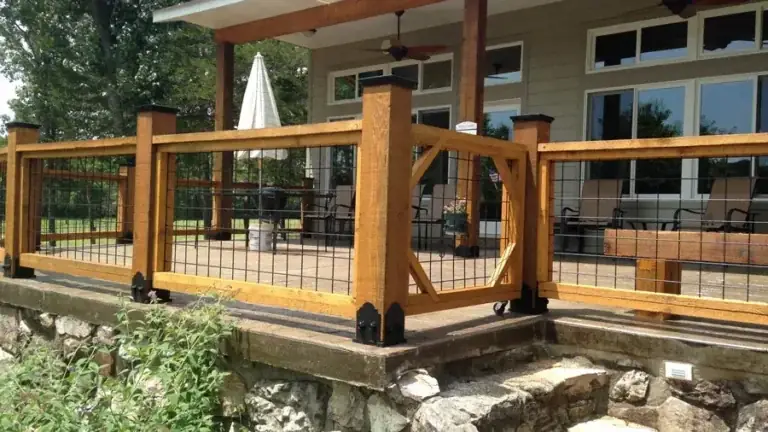
Historically, coastal deck railings were constructed using locally sourced dimension lumber, such as pressure-treated pine, cedar, or redwood. Traditional carpenters notched 4×4 timber posts over outer rim joists and secured them with carbon steel carriage bolts, placing wood balusters between horizontal rails.
Unprotected wood fibers absorbed airborne salt spray and moisture, triggering swell-shrink cycles that caused checking, warping, and rot around fastener holes. Moisture trapped inside joist connections weakened post attachments, compromising structural safety during severe coastal storms.
Emergence of Synthetic Extrusions and Early Material Failures
The development of synthetic decking introduced early PVC and composite railing profiles to coastal building markets. These synthetic extrusions eliminated routine painting, offering an alternative to traditional timber railings along oceanfront decks.
Early uncapped composites lacked protective outer layers, absorbing salt moisture and fading under intense solar UV exposure. Unreinforced hollow PVC rails expanded significantly in hot weather, causing top rails to bow and bracket connections to fail during severe temperature swings.
Advanced Metallurgy, Engineered Polymers, and Structural Glazing
Material engineering advancements introduced co-extruded acrylic cap-stock layers, protective marine powder coatings, high-grade stainless alloys, and laminated safety glass. Modern capped composites feature dense polymer shells that shield internal wood-fiber cores from salt-spray absorption and fungal rot.
Powder-coated aluminum extrusions provide high strength-to-weight ratios, resisting corrosion in humid oceanfront regions. Advanced 316-grade stainless steel cables and laminated glass panels with stiff ionoplast interlayers preserve scenic ocean views while withstanding high wind loads and harsh weather conditions.
Engineering Frameworks and Marine Corrosion Models
Chemical Oxidation and Electrochemical Corrosion Model
Salt spray and atmospheric humidity create an electrolyte layer on exposed metal surfaces, accelerating oxidation.
Carbon steel fasteners corrode rapidly in coastal air. Standard 304 stainless steel resists mild corrosion, but suffers pitting in marine environments. Marine-grade 316 stainless steel contains molybdenum, which forms a protective chromium oxide layer that resists chloride corrosion.
Using marine-grade alloys prevents pitting corrosion and maintains fastener strength in coastal areas.
Thermal Expansion and Material Elasticity Model
Temperature variations cause materials to expand and contract along their length at varying rates.
Unreinforced cellular PVC shows high linear movement under temperature changes. Capped composites expand moderately, whereas wood-plastic composite cores show minimal movement. Extruded aluminum and stainless steel remain dimensionally stable across wide temperature ranges.
Installers must leave accurate expansion gaps at bracket connections during cold-weather assembly to prevent warping during summer heat.
Solar Radiation and Polymer Photodegradation Model
Ultraviolet radiation breaks down polymer molecular chains, degrading unprotected synthetic materials over time.
Unprotected polymers suffer surface chalking, color fading, and micro-cracking after prolonged sun exposure. Advanced synthetic extrusions incorporate UV stabilizers and co-extruded acrylic cap-stock layers to block solar radiation.
Protective acrylic coatings preserve material strength and color appearance in high-altitude environments.
Primary Material Formulations and Coastal Performance
Pressure-Treated Pine and Naturally Durable Hardwoods
Pressure-treated lumber offers an economical entry option, but requires regular maintenance to survive harsh weather. Hardwoods like Ipe offer high density and natural rot resistance, performing well when maintained with protective oils.
Without routine sealing, wood fibers absorb moisture, causing splitting, warping, and fastener loosening. Wood railings require regular sanding, staining, and sealing to preserve structural safety in wet or freezing climates.
Capped Composite and High-Density PVC Systems
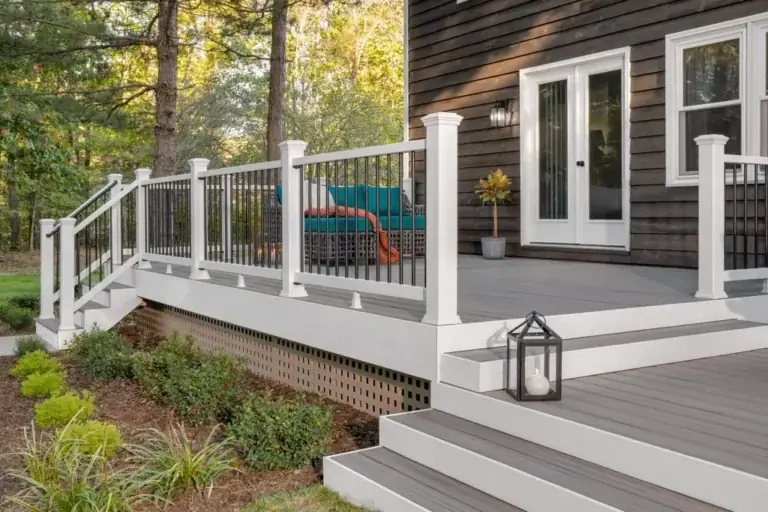
Capped composite railings combine recycled wood fiber with polymer cores, protected by tough acrylic shells. Synthetic post sleeves slide over internal structural posts, creating a low-maintenance exterior barrier.
Composite systems resist moisture, rot, and insect damage, eliminating routine painting cycles. However, thick post sleeves can retain heat, and unreinforced top rails require internal metal stiffeners to prevent sagging over long spans.
Architectural Powder-Coated Extruded Aluminum Systems
Extruded aluminum guardrails combine high structural strength with light physical weight, making them well-suited for severe weather environments. A factory powder-coat finish shields internal aluminum extrusions from moisture and UV degradation.
Factory-assembled aluminum panels drop into post channels, speeding up job-site assembly. While initial material costs exceed standard lumber, aluminum systems require minimal maintenance over decades of service.
Marine-Grade 316 Stainless Steel Cable Assemblies
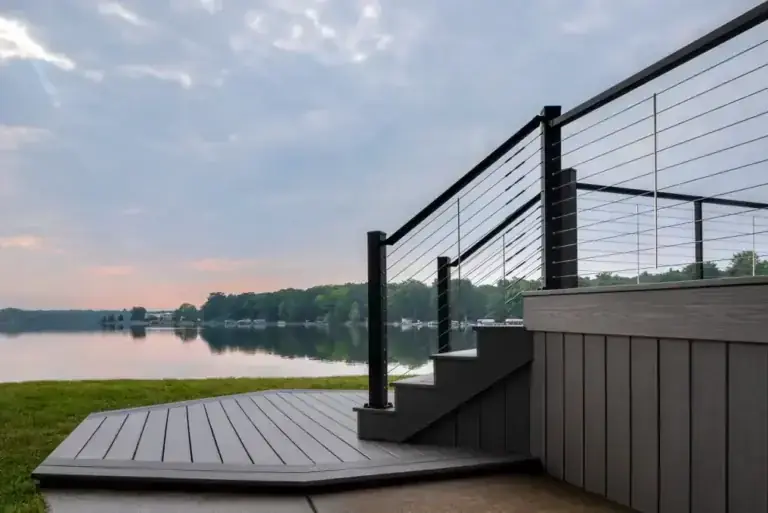
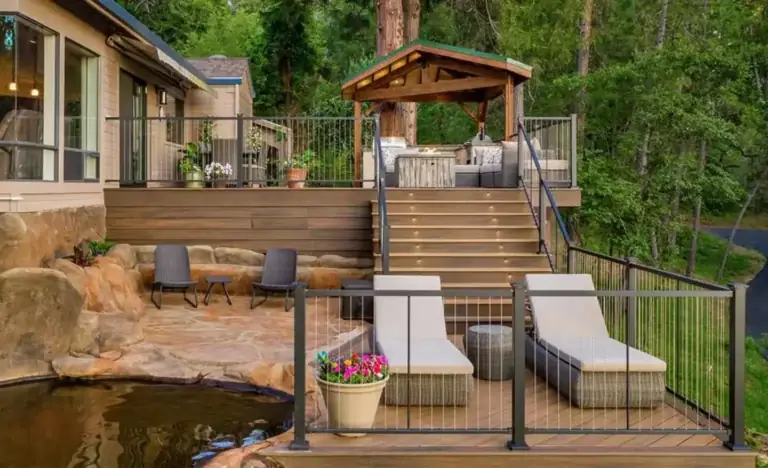
Horizontal cable systems use 316-grade stainless steel wire strands running through metal or timber frame posts. Cable arrays provide minimal wind resistance, allowing wind forces to pass through without loading the guardrail structure.
Cable assemblies require reinforced corner posts and solid joist blocking to support wire tension loads. Periodic tension adjustments are necessary to keep cable strands taut and code-compliant.
Laminated Tempered Safety Glass Systems
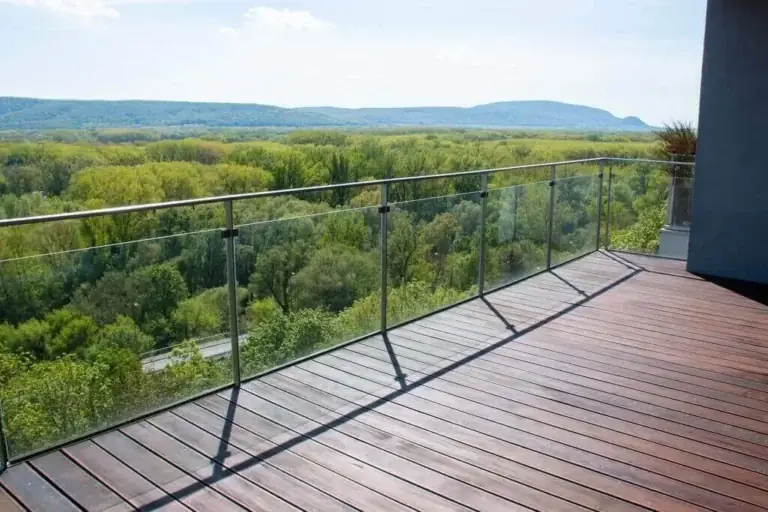
Structural base shoe channels and post-supported glass clamps secure thick laminated safety glass panels along deck perimeters. Laminated glass containing stiff ionoplast interlayers blocks wind, making elevated platforms comfortable in exposed locations.
Glass systems require solid substructure blocking to support heavy panel dead loads. Transparent panels also require periodic cleaning to remove salt residue, dust, and water spots.
Coastal Railing Performance Matrix
| Material Classification | Marine Salt Resistance | Freeze-Thaw Resistance | High Wind Resistance | Annual Maintenance Need | Expected Lifespan |
| Pressure-Treated Wood | Low | Low to Moderate | Moderate | High (Stain/Seal) | 10 to 15 Years |
| Capped Composite | High | High | Moderate to High | Very Low | 20 to 25 Years |
| Powder-Coated Aluminum | High | Very High | High | Very Low | 25+ Years |
| 316 Stainless Cable | Very High | Very High | Maximum (Low Drag) | Low (Tension checks) | 25+ Years |
| Laminated Safety Glass | High | High | High (Solid Barrier) | Low (Cleaning) | 20 to 25 Years |
Realistic Decision Logic for System Selection
Selecting suitable guardrails requires matching material properties to local climate conditions, structural framing, and maintenance requirements.
Oceanfront Marine Environment
-
Install 316-grade stainless steel cable arrays mounted through powder-coated aluminum framing posts.
-
Through-bolt post base plates into double rim joists using stainless steel hardware and non-conductive isolation pads.
High-Altitude Mountain Deck
-
Mount heavy-duty extruded aluminum post framing fitted with 1/2-inch laminated safety glass panels.
-
Add continuous top cap rails to tie glass panels together and distribute wind pressure across neighboring posts.
Wet Pacific Northwest Deck
-
Install capped composite post sleeves equipped with powder-coated aluminum balusters over pressure-treated wood posts.
-
Use pre-drilled rail tracks with bottom drainage weep holes to discharge water and prevent internal moisture accumulation.
Environmental Field Scenarios and Structural Adaptation Best Deck Railing for Coastal Homes
Oceanfront Salt-Spray Exposure
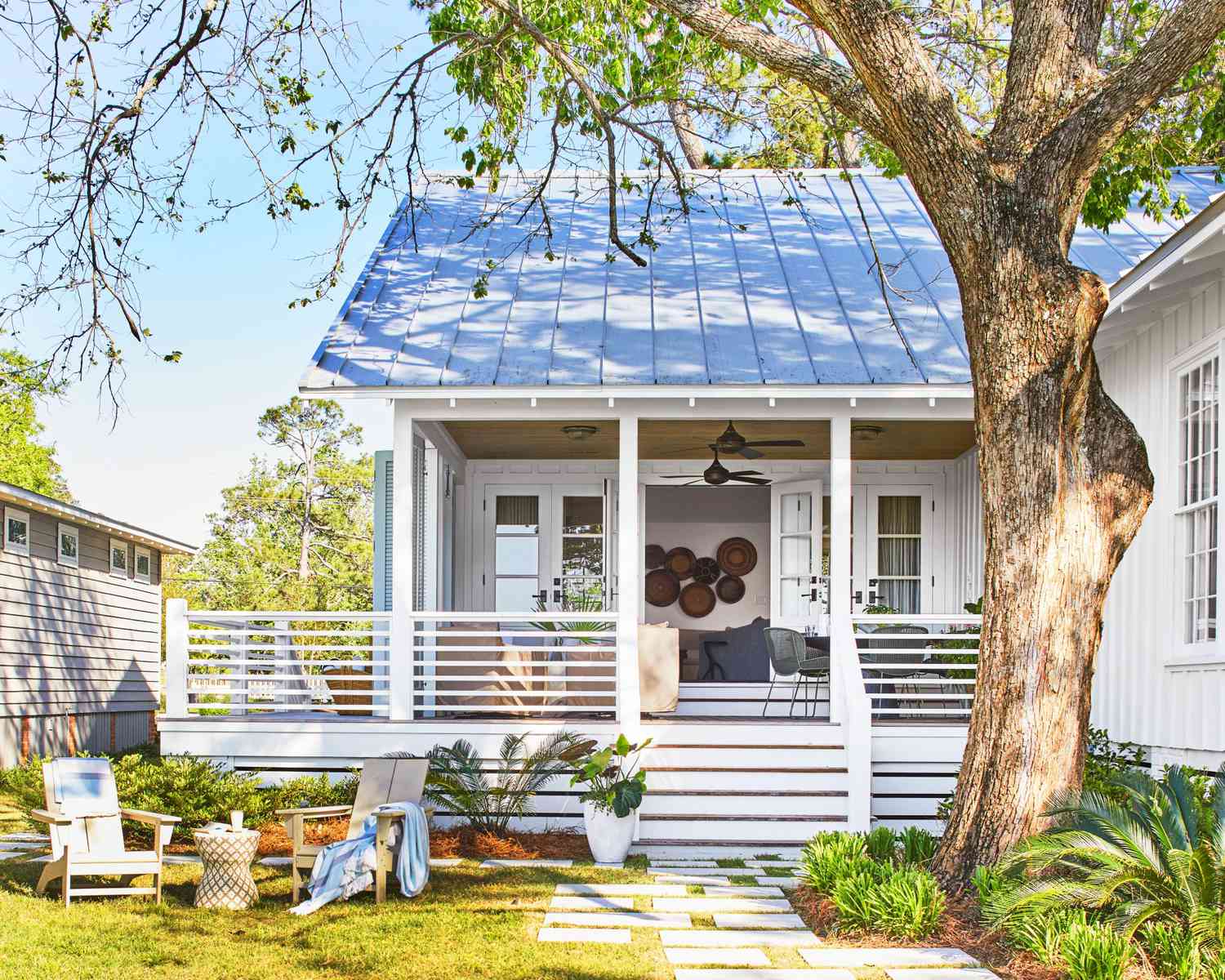
Installing guardrails on oceanfront platforms subjects materials to salt spray, sand abrasion, and coastal winds. Salt deposits accelerate corrosion on low-grade metals, degrading mounting brackets and fasteners.
Specifying 316-grade stainless steel or anodized marine-grade aluminum prevents metal oxidation. Non-conductive isolation pads installed beneath post base plates prevent galvanic reactions with treated wood framing.
High-Altitude Severe Alpine Conditions
Alpine installations face intense UV radiation, heavy snow accumulation, and freezing temperatures. Water trapped inside hollow rail extrusions can freeze and expand, cracking synthetic profiles or bending metal tracks.
Installing aluminum or composite systems with bottom drainage weep holes allows meltwater to drain quickly. Selecting light surface colors reflects solar radiation, preventing surface overheating during hot summer months.
High-Wind Coastal Hurricane Zones
High-wind coastal areas require guardrails engineered to withstand dynamic wind pressures and flying debris. Solid glass barriers absorb wind loads, transferring forces down into base mounting brackets and rim joists.
Using 316-grade stainless steel cables or slim aluminum balusters allows wind to pass through, reducing wind loads on structural posts. Anchor bolts must be through-bolted into double rim joists with solid internal blocking.
Retrofitting Weathered Coastal Substructures
Replacing damaged guardrails on aged coastal framing requires reinforcing underlying substructure members. Aged rim joists often lack internal blocking, requiring framing upgrades before new post brackets are mounted.
Installers reinforce retrofitted framing by adding double rim joists and internal wood blocking using structural lag screws. Swapping thick timber pickets for slim aluminum or cable profiles opens up sightlines and reduces wind resistance.
Life-Cycle Economics and Resource Planning Models
Material Procurement Expenses
Direct expenses include posts, top handrails, bottom tracks, infill kits, mounting brackets, fascia shoes, and structural lag bolts. Ordering hardware components separately increases material costs.
Ordering complete factory-engineered rail kits or pre-cut panel assemblies lowers procurement expenses. Choosing standard factory colors like black, white, or bronze avoids custom coating fees.
Field Labor Overhead and Installation Complexity
Labor costs depend on assembly complexity, hardware piece counts, and field joinery requirements. Custom-welded metal or site-routed wood railings require skilled trade labor over multiple work days.
Pre-engineered modular railing systems use drop-in tracks and snap-in bracket channels, allowing construction crews to complete installations quickly. Streamlined site assembly directly reduces overall labor expenses.
Installed Cost Metrics per Linear Foot
| System Category | Material Cost / Lin. Ft. | Labor Cost / Lin. Ft. | 5-Year Maintenance Cost | 20-Year Total Investment |
| Pressure-Treated Wood | $20 to $35 | $15 to $30 | $15 to $25 | $50 to $90 |
| Capped Composite | $40 to $75 | $25 to $45 | $2 to $5 | $67 to $125 |
| Powder-Coated Aluminum | $45 to $80 | $25 to $50 | $2 to $5 | $72 to $135 |
| 316 Stainless Cable | $70 to $125 | $40 to $80 | $5 to $12 | $115 to $217 |
| Laminated Safety Glass | $120 to $220 | $75 to $145 | $2 to $8 | $197 to $373 |
Specialized Fasteners, Coatings, and Tooling Assemblies
Essential Job-Site Tools
Equipping installation crews with specialized tools speeds up assembly, protects materials, and ensures post mounts meet structural safety codes.
-
Hydraulic Cable Crimpers: Cold-compress stainless steel end fittings onto tension cables, preventing wire pull-out under load.
-
Carbide-Tipped Miter Blades: Produce clean cuts on aluminum extrusions and composite sleeves without tearing material edges.
-
Calibrated Torque Wrenches: Drive post anchor bolts to exact tension limits, preventing thread stripping in structural wood blocking.
-
Precision Laser Levels: Establish level post heights across long deck runs, ensuring smooth top handrail alignment.
-
Hot-Dipped Galvanized Lag Screws: Structural fasteners used to anchor post base plates firmly into internal wood framing.
-
Neoprene Isolation Washers: Placed beneath metal base plates to prevent direct contact with treated wood, stopping galvanic corrosion.
Job-Site Assembly Workflows
Organizing clear job-site workflows minimizes installation errors and lowers total labor expenses.
-
Pre-Marking Substructure Layouts: Layout post locations along deck perimeters before drilling pilot holes, keeping post spacing uniform.
-
Pre-Installing Framing Blocking: Mount double rim joists and internal wood blocking before installing surface deck boards.
-
Setting Posts Level: Shim post base plates flat using stainless steel washers before tightening anchor bolts.
-
Drop-Fitting Modular Panels: Fit balusters and top rails together before dropping complete sections into post mounting brackets.
-
Securing Bracket Fasteners: Drive stainless steel mounting screws through brackets into internal metal rail stiffeners.
Structural Failure Modes and Environmental Risk Taxonomy
Unreinforced Rim Joist Flex
Anchoring support posts to single rim joists without internal wood blocking is a major structural mistake in deck construction. Surface base plates screwed into unreinforced framing flex under applied hand loads.
Over time, leverage forces pull fasteners loose, twisting outer rim joists and creating unstable guardrails. Fixing loose posts after surface decking is installed requires removing boards to add structural blocking.
Post Connection Mechanics
Securing vertical posts demands anchoring directly into internal substructure framing to resist lateral leverage forces:
Screwing post base plates through decking boards into an unblocked rim joist allows applied forces to pull fasteners loose, twisting the rim joist and failing safety inspections.
Through-bolting post base plates into a double rim joist backed by solid internal wood blocking transfers applied forces safely into main deck joists.
Galvanic Corrosion in Dissimilar Metals
Mounting aluminum post bases directly onto copper-treated framing using carbon steel bolts triggers rapid galvanic corrosion. Atmospheric moisture acts as an electrolyte between dissimilar metals.
Galvanic corrosion destroys bolt threads and blisters powder-coated post bases within a few seasons. Installing non-conductive neoprene isolation pads and using stainless steel fasteners prevents chemical hardware degradation.
Cable Line Slackening and Corner Post Bowing
Horizontal cable systems require continuous wire tension to keep infill gaps under four inches. Installing cable hardware into light corner posts without internal steel bracing causes support posts to bow inward.
Post deflection causes cable lines to sag, allowing gaps to exceed four-inch building safety codes. Corner posts must be reinforced with internal steel inserts to maintain proper cable tension over time.
Maintenance Governance, Inspection Protocols, and Adaptation Best Deck Railing for Coastal Homes
Annual Structural Safety Audit
Maintaining guardrail safety requires annual inspections to spot loose hardware, material wear, or structural framing movement early.
-
Post Base Stability Check: Apply lateral force to vertical posts to detect base plate flex, loose anchor bolts, or framing movement.
-
Bracket Attachment Survey: Inspect visible mounting screws and bracket housings, retightening hardware loosened by frame settling.
-
Infill Clearance Verification: Measure gaps between balusters or cable lines to confirm spacing remains strictly under four inches under pressure.
-
Protective Coating Inspection: Check powder coatings and anodized finishes for chips, cracks, or surface corrosion around post bases.
-
Weep Hole Clearing: Ensure drainage weep holes at post bases remain free of dirt and leaves to prevent internal water freezing.
Seasonal Preventative Upkeep Routines
Simple seasonal maintenance protects guardrail finishes and extends overall system service life across all climates.
-
Surface Soap Washing: Wash metal extrusions and composite post sleeves with warm water, mild soap, and a soft brush to remove dirt.
-
Hardware Servicing: Inspect post anchor bolts and bracket screws, retightening hardware backed out by seasonal thermal shifts.
-
Cable Line Retensioning: Tighten slack stainless steel cables using hand wrenches to keep wire arrays taut and code-compliant.
-
Coating Touch-Up: Seal minor powder coat scratches using manufacturer touch-up paint to prevent raw metal oxidation.
Quality Control Metrics, Tracking, and Inspection Logs
Field Quality Control Checklist
Documenting guardrail conditions tracks structural performance over time, providing clear safety records for property owners and building officials.
-
Base Plate Fastener Torque: Confirm post anchor bolts meet torque specs, ensuring zero post movement at joist connections.
-
Top Rail Lateral Deflection: Apply lateral force along top handrails, verifying structural sections resist bowing without permanent deflection.
-
Infill Clearance Inspection: Pass a four-inch sphere between balusters or cable strands under force to verify child safety compliance.
-
Cable Line Tension Measurement: Check wire tension using an inline tension gauge to confirm readings meet manufacturer targets.
-
Surface Finish Continuity: Inspect metal coatings for pinhole corrosion or bubbling, documenting areas needing touch-up sealant.
-
Galvanic Isolation Barrier Check: Confirm non-conductive gaskets remain present between aluminum plates and treated lumber framing.
Early Warning Signals vs Advanced Structural Failure
Catching early material wear prevents expensive structural repairs or sudden guardrail failures.
-
Leading Indicators (Early Warning Signs): Hairline cracks around bracket screw holes, minor cable line slack, tiny chips in post powder coating, and light surface scuffs. Resolving these issues early prevents structural decay.
-
Lagging Indicators (Advanced Failure Signs): Support posts leaning under light hand pressure, sheared anchor bolts, glass panels slipping out of channels, and twisted rim joists. These red flags demand immediate structural repair or full panel replacement.
Common Environmental Misconceptions and Specifying Myths
The Maintenance-Free Synthetic Myth
Composite and aluminum guardrails are often marketed as maintenance-free building products that require no attention after installation. While synthetic materials eliminate sanding and staining, they still require periodic washing to clear dirt, pollen, and salt deposits.
Structural Post Sleeve Misconception
Hollow composite post sleeves resemble solid timber posts, leading some installers to mistake them for load-bearing members. Composite sleeves provide weather protection and finish style, but offer little structural strength. Hollow sleeves must slip over structural steel mounts or pressure-treated wood posts to meet load codes.
Universal Span Rating Fallacy
Many DIY builders assume all guardrail sections can safely span eight feet between support posts. Maximum post spans depend directly on infill material type, top rail cap profile, and internal stiffener size. Cable and glass infills often require shorter post spans to maintain code compliance.
Top-Mount Universal Suitability Fallacy
DIY builders often assume top-mounting post base plates is the only reliable way to anchor guardrails. Top-mounting consumes valuable floor space along deck edges. Fascia-mounted post brackets transfer lateral loads into rim joists while keeping deck surface boards completely clear.
Environmental Stewardship and Lifecycle Carbon Best Deck Railing for Coastal Homes
Material Lifecycle Carbon Assessment
Evaluating guardrail systems involves assessing their environmental footprint across production, usage, and disposal phases.
-
Recycled Content Aluminum: Primary aluminum production requires high energy inputs, but recycling aluminum uses 95% less energy. Specifying recycled aluminum extrusions lowers environmental impact while keeping components fully recyclable.
-
Sustainably Harvested Hardwoods: Certified hardwoods carry low initial manufacturing energy footprints. However, slow timber growth rates require responsible forestry management to prevent deforestation.
-
Synthetic Composite Processing: Composite systems use recycled plastics and reclaimed wood flour, keeping waste out of landfills. However, mixed synthetic materials are difficult to recycle at the end of their service life.
Structural Safety and Long-Term Value
Architects, building contractors, and homeowners share a responsibility to install perimeter guardrails that prioritize user safety and material longevity. Skipping internal post blocking, using non-compliant baluster spacing, or selecting undersized fasteners creates serious fall hazards along elevated platforms. Following engineered installation guidelines ensures outdoor living spaces remain safe, functional, and visually appealing for decades.
Structural Synthesis and Final Architectural Recommendations
Selecting the best deck railing for coastal homes requires evaluating local climate factors, material chemistry, structural post attachment methods, and total installation costs. Treating deck perimeters as engineered safety barriers ensures reliable performance without overspending on unsuitable materials.
Specifying powder-coated aluminum extrusions paired with 316-grade stainless steel cables or marine-grade fasteners provides an ideal balance of strength, corrosion resistance, and low maintenance across challenging environments. Capped composites offer traditional timber aesthetics with reduced upkeep, whereas laminated glass delivers wind protection and open views.
By installing solid internal joist blocking, using structural post anchors, leaving proper thermal expansion gaps at brackets, and completing annual safety audits, property owners can construct durable, code-compliant deck railings that withstand harsh weather over decades of continuous use.