Best Deck Railing for High Elevation: Structural Integrity, Material Engineering, and High-Altitude Environments
Designing elevated outdoor living structures in mountain, coastal bluff, or high-altitude environments requires an uncompromising commitment to structural physics and material science. At upper elevations, environmental forces scale exponentially rather than linearly. Best Deck Railing for High Elevation. Standard residential building practices designed for temperate, sea-level suburban settings fail rapidly when subjected to intense ultraviolet radiation, extreme thermal cycling, severe snow accumulation, and sustained wind shear.
When architects, structural engineers, and property owners specify perimeter guardrails for elevated structures, the visual frame is merely the outer skin of a complex load-transfer network. Every post, fastener, top rail, and infill panel acts as an anchor point within a system that must dissipate lateral wind pressure, resist ice creep, and maintain mechanical integrity despite relentless material fatigue. Choosing an inappropriate material or attachment method introduces severe safety liabilities and promises premature structural failure.
Evaluating perimeter guardrail systems across extreme topographies requires moving beyond decorative appeal to examine metallurgy, tension dynamics, and sub-structure integration. A truly resilient installation balances architectural transparency with brute mechanical strength. Through systematic evaluation of structural mechanics, material degradation pathways, and regional environmental stresses, builders can execute installations that preserve safety and visual elegance across decades of severe climate exposure.
Understanding “best deck railing for high elevation”
Structural Physics and Microclimate Stress
When engineering professionals evaluate the best deck railing for high elevation, they assess an assembly that must withstand extreme environmental forces without compromising structural stability or sightlines. High-elevation environments present a unique combination of physical stressors: severe wind shear, heavy snow shedding, intense solar radiation, and rapid freeze-thaw cycles.
Standard perimeter barriers that perform reliably in low-altitude regions often fail rapidly under mountain or high-bluff conditions. Unreinforced hollow posts flex under wind loads, thin powder coatings degrade under high UV exposure, and improper post anchors pull free from joists under lateral ice pressure. Determining the appropriate railing specification demands a thorough understanding of localized microclimates and structural load paths.
Load Path Mechanics and High-Altitude Codes
Building safety codes establish minimum structural performance standards, but high-altitude microclimates frequently exceed baseline code requirements. Standard residential codes require guardrails to resist a 200-pound concentrated load applied in any direction along the top rail, alongside a 50-pound load across a one-square-foot infill area.
In high-elevation zones, local municipal amendments routinely demand much higher performance thresholds. Sustained wind loads can exceed 100 miles per hour, and localized snow loads on cantilevered decks can exert thousands of pounds of lateral force against guardrail infills. Achieving true structural compliance requires heavy-gauge structural metal framing, continuous internal joist blocking, and heavy stainless steel through-bolts.
Metallurgy and Environmental Degradation
Selecting materials for high-altitude installations requires analyzing chemical and physical degradation mechanisms. Intense solar exposure breaks down organic binder resins in standard paints and thin powder coats, causing surface chalking and cracking that exposes raw underlying metal to moisture.
Simultaneously, rapid thermal expansion and contraction cycles place continuous stress on mechanical connection points and welded joints. Unsealed hollow metal tubing accumulates internal atmospheric condensation, leading to hidden internal rust that compromises structural safety long before external damage becomes visible.
Historical Evolution of High-Altitude Guardrail Systems
Early Timber Railings and Structural Limitations
Early mountain architecture relied primarily on heavy, locally harvested timber for perimeter safety barriers. Thick log rails and rough-sawn lumber provided substantial initial bulk, but exposed wood fibers degraded quickly under mountain weather.
Continuous solar exposure dried out natural timber oils, causing deep checking, splitting, and structural twisting around fastener points. Water penetrated these checks, freezing in winter and accelerating internal rot that weakened the perimeter structure.
The Rise of Mild Steel and Wrought Iron
During the mid-twentieth century, builders increasingly adopted mild steel and ornamental iron for mountain decks and alpine lodges. These solid metal assemblies offered far superior lateral strength and sleeker sightlines than bulky wood posts.
However, ungalvanized mild steel required constant repainting to prevent surface oxidation. In high-altitude regions with frequent snowpack, trapped moisture along post bases caused severe rusting and joist rot, requiring frequent repair.
Modern Engineered Alloys and Hybrid Composites
Contemporary high-altitude architecture utilizes engineered materials designed specifically for extreme environmental performance. Structural extruded aluminum alloys, marine-grade stainless steel cables, tempered structural glass, and advanced fluoropolymer coatings dominate modern high-elevation projects.
These modern hybrid assemblies combine high strength-to-weight ratios with exceptional corrosion resistance and minimal maintenance requirements. Computer-aided engineering allows fabricators to create sleek, high-strength barriers that maintain clear views of alpine landscapes while easily resisting extreme physical loads.
Physics Frameworks and High-Elevation Environmental Dynamics
Wind Shear and Aerodynamic Pressure
High-elevation decks experience elevated wind velocity profiles due to exposed topography and thermal updrafts along mountain slopes.
Solid guardrail infills, such as continuous glass panels or privacy boards, act as sails that capture wind pressure and transfer massive lateral loads into deck joists.
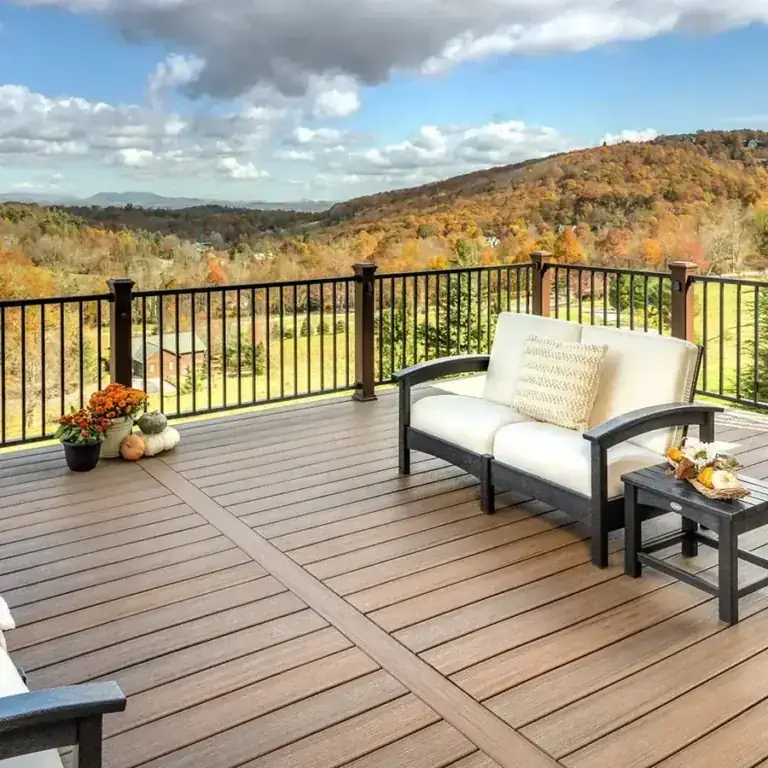
Open infill designs, such as horizontal stainless steel cables or thin metal pickets, allow wind to pass through freely, dramatically reducing structural drag forces.
Solar Photolysis and Thermal Cycling
High elevations receive significantly more ultraviolet radiation than sea-level zones due to thinner atmospheric filtering and snow reflection.
UV radiation breaks down chemical polymer chains in low-grade plastics, wood sealers, and standard powder coatings, causing rapid finish breakdown.
Structural metal expands and contracts significantly during sudden mountain temperature shifts, requiring slotted bolt holes and expansion joints along long railing runs.
Snow Accumulation and Lateral Ice Creep
Deep snowpack on elevated decks consolidates into dense, heavy ice layers that slide laterally across deck boards as temperatures fluctuate.
This sliding ice mass exerts tremendous mechanical pressure against lower railing pickets and post anchors, bending light aluminum or thin steel bars outward.
Installing heavy-gauge structural posts, reinforced bottom rails, or removable winter panel sections prevents structural damage caused by snow creep.
Material Metallurgy and Railing System Categories
Structural Extruded Aluminum Systems
Extruded architectural aluminum alloys, particularly 6005-T5 and 6063-T6, offer an exceptional balance of low weight, structural rigidity, and complete resistance to red rust. Factory-applied AAMA 2605 fluoropolymer coatings protect the underlying metal from intense solar radiation and color fading.
While aluminum profiles do not match the ultimate tensile strength of carbon steel, thicker wall extrusions and reinforced internal ribbing easily satisfy high-wind requirements. Aluminum is particularly well-suited for high-elevation environments where heavy material transport is difficult.
Marine-Grade Stainless Steel Cable Assemblies
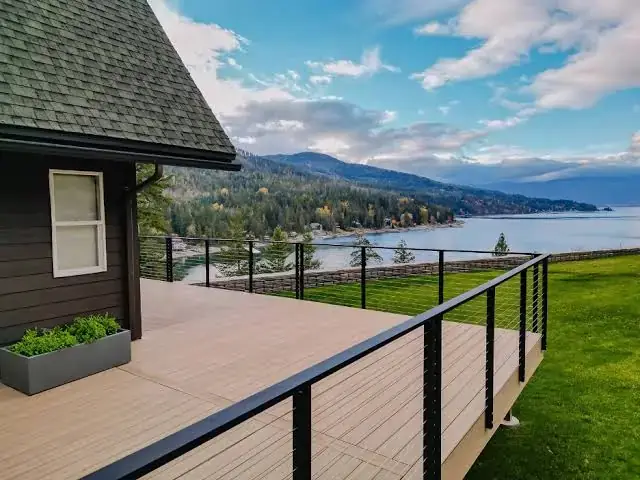
Structural stainless steel cable systems utilize 316-grade stainless steel wire rope suspended between rigid support posts. This material configuration provides maximum visual transparency while offering exceptional tensile strength under heavy lateral loads.
Cable systems allow mountain winds to pass through with minimal resistance, eliminating surface wind pressure on deck sub-framing. However, precise cable tensioning is essential, and support posts must be heavily reinforced to prevent top rails from bowing inward under cumulative cable tension.
Tempered Laminated Structural Glass Panels
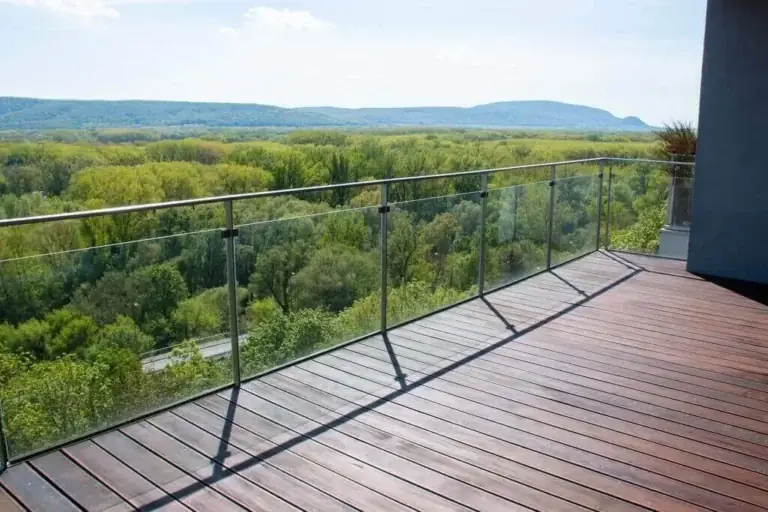
Laminated glass assemblies consist of two layers of tempered glass bonded around a structural polymer interlayer, such as ionoplast or polyvinyl butyral. These panels offer unobstructed view preservation and act as effective wind barriers for outdoor living spaces.
Because glass panels capture full wind pressure, they require heavy-gauge steel or aluminum posts through-bolted into reinforced deck framing. Glass surfaces also require regular cleaning to remove windborne dirt, mineral deposits, and water spots in exposed mountain settings.
High-Elevation Deck Railing Material Comparison
| Material Category | Wind Load Resistance | UV Degradation Resistance | Snow Creep Resistance | Structural Weight | Maintenance Requirements |
| Structural Extruded Aluminum | High | Exceptional (with AAMA 2605) | Moderate to High | Light | Low |
| 316 Stainless Steel Cable | Exceptional | Superior | High | Moderate | Low to Moderate |
| Tempered Laminated Glass | High (High Drag) | Superior | High | Heavy | Moderate |
| Solid Forged Mild Steel | Exceptional | Moderate (Requires Coating) | Exceptional | Very Heavy | High |
System Selection Logic for High Elevations
Choosing the optimal guardrail configuration requires matching system mechanics to specific site conditions and performance priorities.
-
Exposed Wind Ridge Tops: Specify horizontal 316 stainless steel cable assemblies mounted on heavy structural steel or aluminum posts to minimize wind resistance.
-
Extreme Snowpack Zones: Select thick-walled solid steel or heavily reinforced extruded aluminum posts fitted with open picket designs or removable infills.
-
Panoramic View Corridors: Choose laminated tempered glass panels set in heavy structural channels, provided the deck joist framing is engineered for high wind loads.
Real-World Mountain and High-Altitude Scenarios Best Deck Railing for High Elevation
Scenario 1: Alpine Ridge Line Exposed to Severe Wind Shear
A residential deck situated on an exposed mountain ridge at 8,500 feet experiences sustained winter winds exceeding 80 miles per hour. A previous installation featuring solid privacy panels suffered severe post movement and cracked joists during a major storm.
The builder replaces the solid barrier with a 316-grade stainless steel cable system supported by thick-walled structural aluminum posts. Through-bolting the posts into double rim joists with steel backing plates provides exceptional stability, while the open cable design eliminates surface wind drag.
Scenario 2: High-Altitude Ski Resort Heavy Snow Accumulation
A multi-level mountain lodge at a Colorado ski resort accumulates up to six feet of heavy snow on cantilevered outdoor decks. The sliding snowpack bent standard aluminum pickets outward, causing post base welds to fail.
The contractor installs heavy solid forged steel posts paired with thick structural top rails and high-clearance bottom rails. Internal timber blocking and heavy steel tension ties transfer snow creep loads directly into the main floor framing, maintaining full perimeter integrity.
Scenario 3: Coastal Mountain Bluff High-UV and Salt Fog Exposure
An elevated bluff deck overlooking a northern Pacific bay experiences a combination of dense coastal fog, high salt content, and intense solar exposure. Standard painted steel railings rusted rapidly along weld seams and post bases.
The owner specifies high-grade extruded aluminum railings finished with a multi-coat AAMA 2605 fluoropolymer coating and 316 stainless steel fasteners. The combination provides total immunity to red rust and protects the visual finish from solar chalking and chemical degradation.
Scenario 4: Alpine Forest Interface Fire-Prone Zone
A high-elevation home located in a wildland-urban interface requires non-combustible building materials that satisfy local wildfire safety regulations. Wood railings and plastic composite panels are prohibited under strict municipal building ordinances.
The architect integrates an all-metal assembly featuring hot-dip galvanized steel framing and heavy vertical steel pickets finished with a fire-resistant powder coat. The system satisfies wildfire safety standards while offering exceptional mechanical strength against mountain weather.
Economic Dynamics, Sourcing, and Resource Allocation
Material Costs and Long-Term Value Metrics
Initial material investments for high-altitude railing systems vary widely based on material selection, structural grade, and protective finishes. Standard aluminum kits offer low initial costs, whereas custom solid steel or structural glass assemblies demand premium capital outlays.
Investing in high-performance materials like 316 stainless steel or AAMA 2605 powder coatings increases upfront material costs, but eliminates frequent repainting and premature system replacement. Low-cost painted steel systems rust quickly under mountain weather, resulting in higher long-term maintenance expenses.
Transport Logistics and Job-Site Labor
Delivering heavy materials to isolated high-altitude construction sites involves elevated shipping costs, specialized transport equipment, and careful logistics planning. Heavy solid steel panels may require crane lifting or manual hauling up steep terrain, increasing installation labor costs.
Utilizing lightweight, pre-engineered modular aluminum or cable systems streamlines transport and speeds up job-site assembly, helping control labor costs in remote mountain regions.
High-Altitude Railing System Financial Overview (Per Linear Foot)
| System Category | Initial Material Cost | Installation Labor Cost | 10-Year Maintenance Cost | Estimated Total 20-Year Cost |
| Structural Extruded Aluminum | $50 to $90 | $30 to $55 | $40 to $80 | $120 to $225 / Foot |
| 316 Stainless Steel Cable | $65 to $120 | $45 to $80 | $60 to $120 | $170 to $320 / Foot |
| Tempered Laminated Glass | $110 to $220 | $70 to $130 | $100 to $200 | $280 to $550 / Foot |
| Custom Solid Steel | $95 to $190 | $65 to $115 | $150 to $300 | $310 to $605 / Foot |
Installation Tools, Fasteners, and Structural Rigging
Specialized Equipment for High-Altitude Framing
Executing secure guardrail installations in mountain environments requires specialized tools and heavy-duty structural hardware.
-
Magnetic Base Drill Presses: Drill clean, accurate bolt holes through thick steel flange plates and joist brackets without bit slippage.
-
Hydraulic Cable Swaging Tools: Cold-press stainless steel end fittings onto structural wire ropes to guarantee full tensile load capacity.
-
Laser Alignment Systems: Verify post height and vertical plumb across long, uneven deck perimeters exposed to variable topography.
-
Structural Tension Anchor Ties: Connect post bases directly to internal floor joists, providing code-compliant resistance against leverage forces.
-
Zinc Cold-Galvanizing Sprays: Coat field-cut steel tube ends and drill holes immediately to prevent touch-point oxidation.
-
Calibrated Torque Wrenches: Tighten structural post bolts to exact engineering specifications without stripping thread engagement.
Step-by-Step Framing Protocols
Following rigorous installation procedures prevents post movement, frame distortion, and premature joint wear over time.
-
Verifying Substructure Blocking: Confirm double rim joists and solid internal timber blocking exist at every post location before mounting hardware.
-
Setting and Plumb Checking Support Posts: Position posts over anchor points and verify vertical alignment using two perpendicular levels.
-
Through-Bolting Post Flange Plates: Secure post bases using heavy stainless steel through-bolts fitted with wide backing washers and locking nuts.
-
Installing Railing Framework and Infills: Secure top rails, bottom tracks, or cable runs into post brackets, creating rigid structural connections.
-
Applying Protective Sealants and Isolation Bushings: Insert neoprene gaskets between dissimilar metals to prevent galvanic reaction and seal fastener penetrations.
Degradation Pathways and Structural Risk Taxonomy
Post Attachment Failure and Structural Wobble
Mounting guardrail posts using lag screws driven into unreinforced deck boards or single rim joists is a major structural error. Outward leverage forces pull lag screws out of soft wood fibers, causing posts to tilt and failing safety inspections.
Installing double rim joists, solid timber blocking, and steel tension tie brackets transfers leverage forces directly into the main deck framing. Solid structural sub-framing prevents post movement, keeping perimeter railings completely rigid under load.
Internal Condensation and Freeze-Thaw Splitting
Unsealed hollow metal tubing traps internal atmospheric moisture during warm day cycles. When temperatures plunge below freezing at night, this trapped water expands as it freezes, splitting tube walls and cracking structural welds.
Drilling small drain weep holes at the base of every hollow post allows internal condensation to escape freely. Proper internal drainage prevents freeze-thaw damage, preserving metal strength across severe winter seasons.
Galvanic Reaction and Fastener Failure
Using standard carbon steel or uninsulated fasteners to anchor aluminum or steel post bases triggers rapid electrochemical galvanic decay. Moisture acts as an electrolyte, corroding fastener threads and weakening post attachment points.
Using 304 or 316-grade stainless steel hardware fitted with neoprene isolation washers prevents metal-to-metal contact and stops galvanic corrosion. Coated stainless hardware maintains structural clamping force across changing weather conditions.
Surface Coating Delamination and UV Chalking
Applying standard paints or thin powder coatings over unprimed metal surfaces leads to rapid blistering, chalking, and flaking under high UV exposure. Moisture penetrates beneath damaged coatings, rusting raw metal and causing unsightly rust stains.
Preparing metal surfaces via abrasive sandblasting and applying zinc-rich primers before applying AAMA 2605 powder coatings ensures superior paint adhesion. Proper coating preparation maintains appearance and corrosion resistance for decades.
Long-Term Maintenance, Finishes, and System Adaptation
Annual High-Altitude Inspection Protocols
Maintaining safety and structural stability requires conducting thorough annual inspections of all guardrail components.
-
Post Fastener Tension Check: Inspect structural anchor bolts beneath deck framing, retightening hardware loosened by seasonal wood shrinkage.
-
Cable Tension Audit: Measure tension across stainless steel cable runs, adjusting swage turnbuckles to maintain proper code spacing.
-
Infill Clearance Verification: Measure gaps between vertical pickets or horizontal cables, confirming openings do not exceed four inches.
-
Coating Touch-Up Inspection: Inspect powder coatings for chips, scratches, or UV chalking, applying zinc primer and matching touch-up paint.
-
Drain Weep Hole Clearance: Check bottom weep holes on hollow metal posts, clearing trapped dirt or debris using wire picks.
Seasonal Washing and Coating Protection
Routine cleaning removes accumulated salt, soot, and mineral deposits, preserving powder-coated surfaces and preventing coating breakdown.
-
Mild Soap Washing: Clean metal surfaces using warm water, mild detergent, and soft sponges to lift environmental dirt.
-
Freshwater Rinsing: Rinse all components thoroughly with clean water sprays to remove soap residue and loose debris.
-
Microfiber Towel Drying: Wipe down smooth handrails and glass panels with microfiber towels to prevent mineral water spots.
-
Protective Wax Application: Apply high-grade automotive paste wax to powder-coated metal surfaces annually to enhance UV resistance and water bead performance.
Inspection Protocols and System Performance Metrics
Quality Control Fabrication Checklist
Systematic quality control checks during fabrication and installation ensure guardrails satisfy local safety codes and performance specifications.
-
Substructure Support Audit: Verify double rim joists, solid blocking, and steel tension tie brackets exist at every post location.
-
Post Plumb Tolerance Check: Confirm support posts sit plumb within 1/16-inch tolerance across their entire height.
-
Four-Inch Sphere Safety Metric: Ensure a four-inch rigid sphere cannot pass between any pickets, cables, or glass panels under manual pressure.
-
Hardware Metallurgy Audit: Verify all structural mounting bolts, washers, and nuts consist of 304 or 316-grade stainless steel.
-
Weld Quality Inspection: Examine welded joints for complete penetration, smooth finish, and total absence of surface porosity.
Early Warning Signs vs Advanced Failure Metrics
Recognizing early material degradation allows property owners to perform proactive repairs before safety is compromised.
-
Early Warning Indicators: Small surface rust spots around fastener heads, minor cable tension loss, light paint chalking, and faint squeaking under load. Addressing these early indicators prevents structural decay.
-
Advanced Failure Signals: Visible post tilting under light pressure, severe rust flaking around post bases, cracked weld joints, loose through-bolts, and bent top rails. These severe indicators demand immediate structural repair or replacement.
Common Myths and High-Altitude Oversimplifications Best Deck Railing for High Elevation
The “Thicker Posts Solve All Structural Issues” Fallacy
Increasing post thickness without reinforcing underlying deck framing does not prevent post movement. Thick structural posts mounted into single rim joists using lag screws will still flex under lateral loads because the underlying wood fibers deform under stress.
The “Stainless Steel Is Maintenance-Free” Misconception
Assuming stainless steel cable systems require zero maintenance is a common error. Stainless steel can develop surface spot rust when exposed to severe weather, and cable runs naturally loosen over time, requiring periodic turnbuckle adjustments.
The “Glass Panels Block All Mountain Weather” Myth
While glass panels provide an effective wind barrier, they trap drifting snow against deck surfaces, creating localized snowpack accumulation. Additionally, glass panels experience severe wind drag that transfers significant force into deck framing.
The “Aluminum Is Too Light for High-Wind Zones” Fallacy
Assuming aluminum is inherently inferior to steel under wind loads overlooks modern extrusion engineering. Heavy-wall structural aluminum extrusions featuring internal reinforcement ribs easily satisfy high-wind building codes while providing total rust immunity.
Environmental Ethics and Material Lifecycle Engineering
Material Recyclability and Sustainable Sourcing
Selecting durable guardrail materials involves evaluating lifecycle environmental impacts, manufacturing energy demands, and end-of-life recyclability.
-
100% Metal Recyclability: Aluminum and stainless steel components can be fully recycled at end of life, reducing environmental impact.
-
Extended Service Longevity: Installing corrosion-resistant metal systems eliminates frequent structural replacement, conserving raw materials over time.
-
Elimination of Chemical Sealers: Metal and glass systems eliminate the need for toxic chemical wood stains, sealers, and preservers that leach into soil.
Professional Architectural Leadership
Engineers, architects, and builders share a professional responsibility to construct high-elevation guardrails that prioritize occupant safety and environmental durability. Specifying high-performance materials, robust post anchors, and weather-resistant finishes ensures elevated living spaces remain safe and structurally sound for decades.
Comprehensive Synthesis and Architectural Judgment
Determining the best deck railing for high elevation requires balancing structural mechanics, material metallurgy, environmental resistance, and site aesthetics. Treating perimeter barriers as integral elements of a deck’s structural system ensures elevated outdoor spaces perform safely under extreme mountain conditions.
Combining heavy-wall extruded aluminum or 316 stainless steel cable assemblies with solid internal joist blocking provides exceptional resistance against high wind shear, ice creep, and solar radiation. Utilizing continuous top handrails, stainless steel fasteners, and UV-resistant powder coats maintains frame alignment and visual elegance across changing weather seasons.
By avoiding unreinforced post anchors, maintaining cable tension, conducting annual fastener inspections, and applying protective wax coatings, property owners ensure high-elevation deck railings deliver reliable safety and long-term durability across decades of severe climate exposure.