Common Deck Railing Staining Mistakes And How To Fix Them Correctly
Protecting exterior timber structures requires a complete understanding of wood anatomy, chemistry, and environmental exposure dynamics. Deck railings experience continuous thermal expansion, direct ultraviolet radiation, and localized moisture accumulation. Common Deck Railing Staining Mistakes. While flat deck boards endure high foot traffic, vertical railings absorb severe solar radiation across exposed surfaces.
Contractors and homeowners frequently miscalculate the physical chemistry involved in wood coating penetration. Applying architectural stains over wet or contaminated wood fibers causes early film separation. These failures leave timber vulnerable to wood-rotting fungi and structural decay.
Preventing finish failures requires careful surface preparation, proper timber moisture testing, and correct application techniques. Builders who master these chemical principles protect property value and extend the lifespan of timber guardrails.
Understanding “Common Deck Railing Staining Mistakes”
Analyzing common deck railing staining mistakes reveals that most finish failures originate during initial surface preparation. Applying protective coatings over mill glaze or residual mill oils prevents deep pigment penetration into interior wood cells.
Misinterpreting Wood Moisture Dynamics
Wood acts like a porous natural sponge that constantly absorbs and releases atmospheric moisture. Applying oil-based or acrylic stains over damp timber traps moisture deep inside wood fibers. Trapped moisture evaporates under sun exposure, forcing the protective coating film to blister and peel.
The Failure of Surface Preparation Shortcuts
Rushing preparation steps remains a major cause of early coating failure. Pressure washing alone cannot remove stubborn mill glaze or broken-down wood lignin fibers. Proper surface preparation requires applying chemical cleaners, using pH-neutralizing brighteners, and performing mechanical sanding.
Deep Contextual Background
Wood preservation methods have transformed alongside changes in exterior coating chemistry. Historical wood finishes relied heavily on solvent-borne linseed oil formulations and lead pigments. These deep-penetrating oil finishes protected timber by filling internal cellular pores, though they required frequent maintenance.
Environmental Regulations and Formula Shifts
Modern environmental regulations reduced allowable volatile organic compound levels in architectural coatings. Paint manufacturers responded by developing water-borne acrylic hybrids and modified alkyd resins. These modern formulations dry faster on the surface, but they demand higher surface cleanliness to bond effectively.
Modern Timber Processing Challenges
New pressure-treated lumber contains high levels of chemical preservatives and internal moisture. Furthermore, smooth factory planers create mill glaze, which seals outer wood pores tightly. Installers who coat new lumber immediately experience severe stain rejection and uneven pigment blotching.
Conceptual Frameworks and Mental Models
Applying structured physical frameworks helps builders achieve uniform coating adhesion on complex vertical railings.
The Capillary Absorption Model
This framework tracks liquid stain movement into porous wood fibers. Deep capillary absorption requires open cellular pores and low wood moisture levels. When internal moisture blocks wood pores, liquid stain rests on the outer surface, forming a weak film that peels easily.
The UV Lignin Degradation Cycle
Ultraviolet radiation breaks down natural lignin polymers that bind wood fibers together. Sun-exposed timber turns gray as surface lignin decomposes into loose cellulose fibers. Applying stain over degraded gray fibers causes early finish failure because the coating bonds to loose dust rather than solid wood.
Key Categories or Variations
Categorizing common deck railing staining mistakes enables homeowners to identify specific application errors before applying finishes.
Over-Application and Lap Mark Formation
Applying excessive stain on vertical balusters creates runs, dark drips, and shiny surface spots that dry unevenly.
Coating Damp Wood Structures
Failing to verify internal wood moisture levels with a digital moisture meter traps water inside wood pores.
Skipping Wood Brightening Treatments
Omitting acidic wood brighteners after alkaline stripping leaves timber dark, unneutralized, and chemically hostile to new coatings.
Staining Under Direct Sunlight
Applying finishes during high temperatures causes liquid solvents to flash off quickly, preventing uniform wood penetration.
Ignoring End-Grain Capillaries
Neglecting cut post tops and baluster ends allows rain to soak directly into open wood grain.
Coating Failure Analysis
| Failure Mode | Primary Physical Cause | Surface Visual Symptom | Corrective Action Required |
| Film Peeling | High internal wood moisture | Flaking sheets of stain | Complete chemical stripping and drying |
| Lap Marks | Fast solvent evaporation | Dark overlapping stripes | Mechanical sanding back to bare wood |
| Surface Blistering | Trapped moisture under film | Bubble formations | Scraping, sanding, and re-coating |
| Black Spotting | Mildew growth under coating | Dark blotches beneath film | Bleach washing and re-application |
| Color Blotching | Uneven mill glaze removal | Irregular pigment absorption | Chemical washing and uniform sanding |
Detailed Real-World Scenarios Common Deck Railing Staining Mistakes
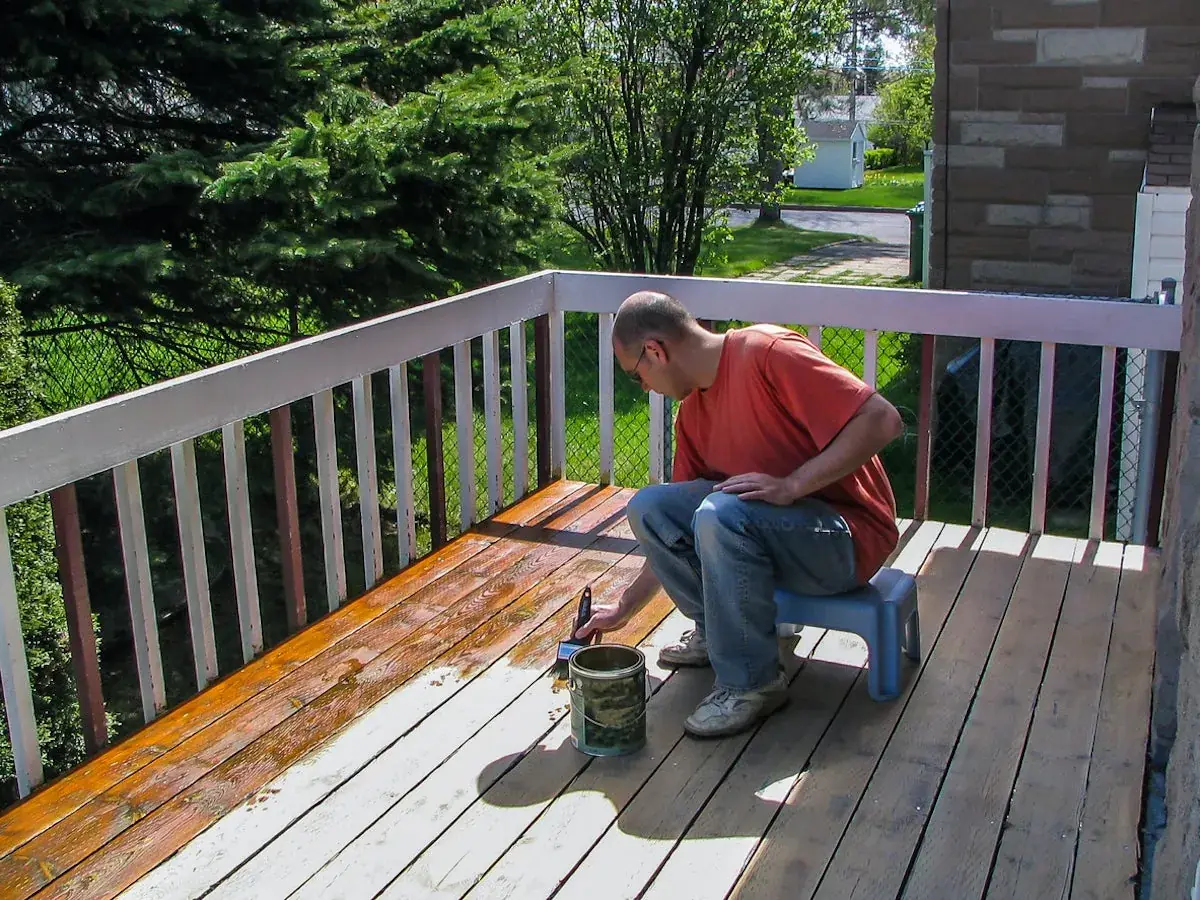
Scenario A: Staining New Pressure-Treated Lumber
A contractor coats a newly installed pressure-treated pine guardrail immediately after construction finishes. The internal wood moisture level measures twenty-four percent at application time. Within eight weeks, internal moisture forces the new stain off the wood, causing severe peeling across all vertical balusters.
Resolving this failure requires allowing the lumber to dry below fifteen percent moisture content. The damaged finish must be chemically stripped, scrubbed thoroughly, and sanded before re-applying a high-penetration stain.
Scenario B: Lap Marks on Vertical Balusters
An installer stains an intricate cedar railing package under direct afternoon sunlight. The oil finish dries quickly on exposed surfaces before the installer can back-brush overlapping strokes. Dark lap marks and sticky runs appear across every vertical post.
Planning, Cost, and Resource Dynamics
Budgeting proper time and capital for surface preparation prevents expensive chemical stripping projects later.
Resource Allocation Strategy
Proper capital distribution ensures that cleaning chemicals and testing tools receive sufficient funding alongside high-grade stain products.
-
Chemical Cleaners and Neutralizing Brighteners: 25%
-
High-Penetration Exterior Stain Products: 35%
-
Sanding Abrasives and Prep Supplies: 20%
-
Testing Tools and Safety Gear: 20%
Staining Resource Expenditure
| Project Stage | Budget Cost Level | Labor Hours Required | Primary Tool Needed |
| Chemical Stripping | Moderate | High | Sodium hydroxide cleaner & pressure washer |
| Wood Neutralization | Low | Moderate | Oxalic acid wood brightener |
| Mechanical Sanding | Moderate | High | Eighty-grit random orbital sander |
| Stain Application | High | Moderate | Natural-bristle brush & back-brush pad |
Tools, Strategies, and Support Systems Common Deck Railing Staining Mistakes
Deploying professional testing equipment ensures predictable coating adhesion on all timber species.
Digital Pin Moisture Meters
Using digital moisture meters guarantees that wood internal moisture measures below fifteen percent before stain application begins.
Oxalic Acid Brighteners
Applying oxalic acid neutralizes alkaline stripper residues and restores natural timber pH levels, opening wood pores for stain absorption.
Natural-Bristle Back-Brushes
Utilizing natural-bristle brushes forces liquid stain deep into vertical wood pores while smoothing out drips and runs.
Risk Landscape and Failure Modes
Understanding coating failure dynamics prevents recurring financial losses on exterior restoration projects.
Applying heavy film-forming stains over raw exterior wood leads to predictable finish failure. Rain penetrates unsealed end-grain cuts, raising internal moisture levels behind the surface film. Solar heat pushes trapped moisture outward, breaking the adhesive bond and causing widespread peeling across all vertical railings.
Structural Decay Hazards
Unprotected wood joints collect standing water, encouraging wood-destroying fungi growth that weakens handrail structural posts.
Property Asset Depreciation
Peeling deck finishes lower overall property appearance, requiring costly chemical stripping and mechanical restoration.
Governance, Maintenance, and Long-Term Adaptation
Establishing routine maintenance protocols extends the operational life of exterior wood stains.
Maintenance Quality Checklist
-
Inspect handrails annually for signs of thin pigment, film wear, or water absorption.
-
Clean vertical balusters with mild detergent solutions to remove airborne dust and pollen.
-
Test water repellency by sprinkling water drops onto top handrail surfaces.
-
Apply light maintenance coats before base coats wear down to bare wood fibers.
-
Sand rough end-grain cuts smoothly to prevent water penetration into vertical posts.
Measurement, Tracking, and Evaluation
Evaluating coating performance requires checking both application indicators and long-term surface weather signals.
Leading preparation indicators include verifying wood moisture content below fifteen percent, confirming complete mill glaze removal, and checking surface pH neutrality.
Lagging performance signals include observing water beading on top rails, verifying color retention across vertical posts, and confirming zero film peeling after winter freezes.
Common Misconceptions and Oversimplifications Common Deck Railing Staining Mistakes
-
Myth: Pressure washing alone prepares bare wood for stain application.
Fact: High-pressure water gouges wood fibers without removing mill glaze or neutralizing natural wood acids.
-
Myth: New pressure-treated wood should age for an entire year before staining.
Fact: Unprotected wood degrades under UV rays within weeks; timber should be stained as soon as moisture drops below fifteen percent.
-
Myth: Thick coats of solid stain provide better long-term protection.
Fact: Heavy solid coats form surface films that crack and peel easily on vertical railings.
-
Myth: Water-based acrylic stains penetrate wood deeper than traditional oil-based formulas.
Fact: Oil-based formulas feature smaller molecular structures that penetrate deeper into wood cellular pores.
Ethical, Practical, or Contextual Considerations
Maintaining timber structures requires prioritizing long-term wood preservation over fast cosmetic upgrades. Attempting to rush project timelines by skipping essential chemical cleaning steps creates hidden restoration costs for property owners. Professional contractors maintain high quality standards by verifying wood moisture levels before opening stain containers.
Conclusion
Preventing deck railing coating failures requires careful surface preparation, accurate wood moisture testing, and correct application techniques. Understanding chemical penetration mechanics enables builders to create long-lasting exterior finishes.
Analyzing common deck railing staining mistakes allows homeowners and contractors to avoid costly finish failures. Prioritizing proper wood preparation ensures that exterior handrails resist harsh weather, retain visual appeal, and protect structural timber for years.