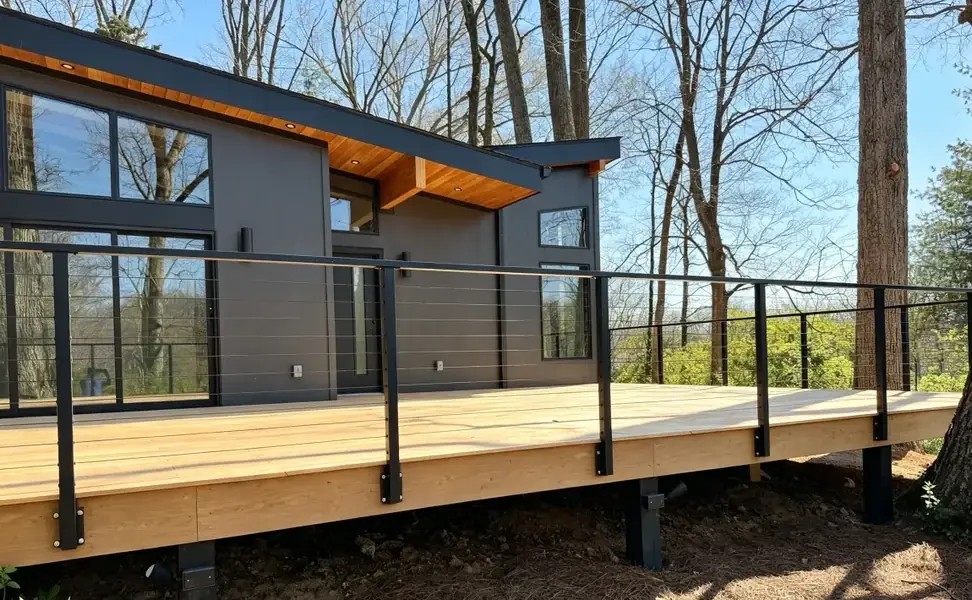
How To Plan Cable Deck Railing On A Budget Efficiently
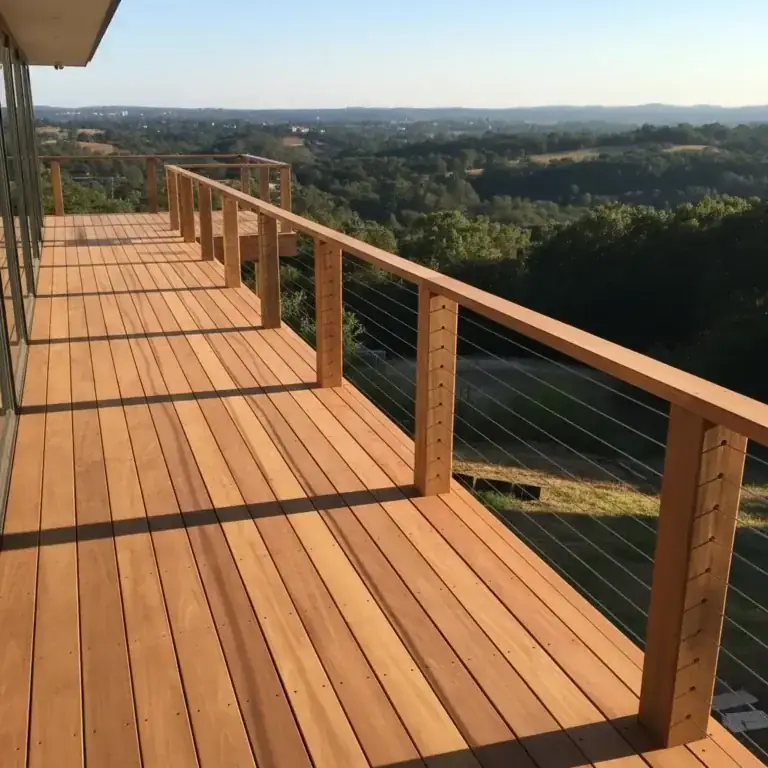
Architectural guardrail installations represent a significant portion of deck construction expenditures. Property owners frequently select cable infill systems due to their clean sightlines, minimal visual obstruction, and modern aesthetic profile. How To Plan Cable Deck Railing On A Budget. However, high material procurement costs often deter budget-conscious builders from pursuing stainless steel cable assemblies.
Engineering a cost-effective cable guardrail requires balancing structural safety with material efficiency. Unlike traditional timber balusters, tensioned cable systems exert continuous lateral loads on end posts and corner structures. Reducing project costs without compromising code compliance demands a deep understanding of post spacing, tensioning hardware, and material selection.
Budget planning must extend beyond initial retail material pricing. Long-term maintenance requirements, installation labor hours, and municipal permit approvals significantly impact overall financial outlay. Analyzing these interconnected factors allows property owners to achieve modern design objectives while maintaining strict capital limits.
Understanding “How to Plan Cable Deck Railing on a Budget”
Learning how to plan cable deck railing on a budget requires evaluating structural layout efficiency before purchasing hardware. Cost overruns usually stem from excessive hardware fittings, improper post spacing, and unneeded material upgrades. A thorough budget strategy prioritizes load-bearing structural integrity while minimizing specialized factory assemblies.
Balancing Structural Mechanics and Cost Savings
Cable infill systems rely on tension to satisfy building code sphere-deflection tests. Local building inspectors enforce rules requiring that a four-inch rigid sphere cannot pass between adjacent cables under lateral force. Achieving this rigidity demands consistent cable tension, which places immense horizontal pull on corner and terminal posts.
When builders attempt to cut costs by using thin wood framing, corner posts bend inward under load. Correcting bent structural framing requires costly demolition, replacement posts, and extra hardware. Budget planning must focus on reinforcing terminal posts efficiently rather than buying expensive proprietary post kits.
Avoiding Expense Oversimplification
A common mistake involves underestimating the cumulative expense of stainless steel tensioning hardware. While bulk cable spools remain relatively inexpensive, swaged fittings, turnbuckles, and end caps multiply rapidly across multiple deck runs. Reducing the total number of termination points directly lowers overall material expenditures.
Optimizing Layout Efficiency
Streamlining deck perimeter geometries eliminates unnecessary corner posts and double-terminal assemblies. Straight cable runs through intermediate posts require far fewer mechanical tensioners than multi-angle layouts. Designing continuous runs significantly reduces total fitting counts across the entire perimeter.
Systemic Evolution of Cable Railing Architecture
Modern residential cable guardrails originated in commercial maritime and industrial architectural environments. Early marine rigging relied on heavy-duty galvanized steel cables and forged turnbuckles engineered for harsh saltwater exposure. These early systems emphasized raw structural durability over residential visual appeal.
Transition to Residential Construction
Residential adoption accelerated as manufacturers developed sleeker stainless steel fittings and thinner three-sixteenths and one-eighth inch cable profiles. Aluminum and steel post systems emerged, offering pre-drilled cable pass-through holes that simplified jobsite assembly. However, early residential systems carried premium price tags, limiting installation primarily to luxury custom homes.
Market Maturation and Component Accessibility
The expansion of global supply chains and standardized offshore manufacturing dramatically reduced component costs over the past two decades. DIY-friendly hydraulic swaging tools and surface-mount tensioning hardware made cable installations accessible to general contractors and independent homeowners. Today, budget optimization centers on choosing between field-swaged components and pre-assembled factory systems.
Conceptual Frameworks for Cost-Effective Design
Structured analytical models enable property owners to optimize project expenditures while maintaining full structural code compliance.
The Linear Efficiency Model
This framework evaluates the ratio of tensioning fittings to total linear footage. Terminal posts require expensive mechanical tensioners, whereas intermediate posts only require drilled pass-through holes. Maximizing the distance between terminal points minimizes the cost per linear foot.
The Hybrid Framing Framework
Combining distinct materials optimizes structural strength and financial expenditure. Utilizing pressure-treated wood or structural composite lumber for heavy terminal posts while inserting thin metal intermediate balusters maintains rigidity. This hybrid approach significantly reduces material costs compared to purchasing all-aluminum post systems.
Hardware Complexity Reduction
Hardware complexity correlates directly with labor time and overall procurement costs. Choosing simple threaded-stud tensioners over fully hidden internal sleeve fittings lowers unit costs substantially. Standard hydraulic hand-swaging tools allow builders to use lower-cost bulk fittings rather than paying for expensive pre-swaged factory assemblies.
Engineering Variations and Material Trade-Offs
Selecting the appropriate material combination dictates both immediate installation costs and long-term maintenance requirements.
Material System Trade-Offs
Wood post structures offer the lowest initial material investment. Pressure-treated pine provides strong load resistance at a fraction of the cost of extruded aluminum or stainless steel posts. However, wood expands, contracts, and twists over time as moisture content fluctuates. Environmental wood movement eventually loosens cable tension, requiring periodic manual adjustment.
Extruded aluminum posts eliminate wood warping and provide pre-drilled, powder-coated durability. While aluminum systems demand a higher upfront financial investment, they substantially reduce installation labor hours. Aluminum intermediate posts maintain consistent cable alignment, preventing premature wear on stainless steel strand coatings.
Stainless steel posts represent the highest tier of structural rigidity and visual minimalism. Grade 316 stainless steel resists atmospheric oxidation exceptionally well, making it ideal for coastal environments. However, its high raw material cost generally places full stainless steel post systems outside restricted budget parameters.
Material Performance Comparison
| Material Configuration | Initial Cost Level | Installation Complexity | Long-Term Maintenance | Lifespan Expectancy |
| Pressure-Treated Wood Framing | Low | Moderate | High (Sealing/Retensioning) | 10–15 Years |
| Hybrid Wood Terminals & Metal Balusters | Moderate-Low | Moderate | Moderate | 15–20 Years |
| Powder-Coated Aluminum Systems | Moderate-High | Low | Low | 20–25+ Years |
| 316 Stainless Steel Commercial Posts | High | High | Very Low | 30+ Years |
Realistic Field Scenarios and Structural Realities How To Plan Cable Deck Railing On A Budget
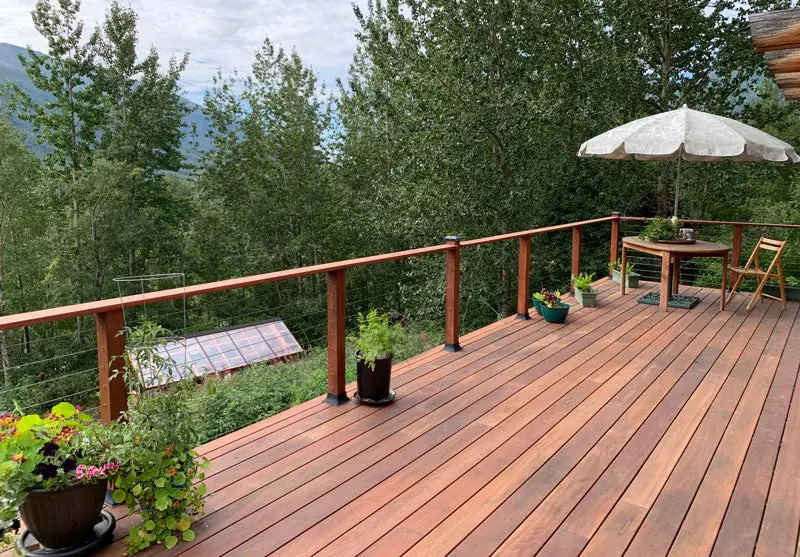
Real-world installations highlight the structural challenges that emerge when implementing budget-focused cable designs.
Scenario A: Retaining Tension Across Long Deck Runs
A homeowner installs a seventy-foot continuous cable run along a rectangular elevated deck to minimize expensive end-fitting purchases. Standard code dictates three-inch cable vertical spacing to prevent the four-inch sphere from passing through under tension. Over a seventy-foot span, cumulative cable stretch and structural frame compression reduce tension rapidly.
To distribute tension loads safely across structural posts, heavily blocked terminal posts are installed at both ends of the run to withstand the heavy tension pull. Between these terminal ends, intermediate posts feature simple pass-through holes that support cable alignment without bearing terminal tension loads.
To resolve tension loss without adding expensive intermediate tensioning fittings, the builder inserts heavy structural blocking inside the rim joist framing at terminal locations. Stabilizer bars are placed every forty-eight inches along the run to maintain vertical cable alignment without creating new terminal load points.
Scenario B: Coastal Environment Corrosion Challenges
An installer uses lower-cost Grade 304 stainless steel cables and fittings on a oceanfront deck project to save fifteen percent on hardware costs. Within eighteen months, airborne salt particles cause tea-staining oxidation across all cable strands. Correcting the issue requires purchasing specialized passivating chemical cleaners or replacing the entire assembly with Grade 316 stainless steel.
Cost Dynamics and Budget Allocation Strategy
Budget allocation must reflect structural priorities to prevent mid-project financial shortfalls. Allocate capital primarily toward structural anchor points, high-grade cable strands, and code-compliant framing.
Component Budget Allocation
Strategic capital distribution requires allocating thirty-five percent of the budget to cable hardware and tensioners, thirty-five percent to structural posts and framing, fifteen percent to fasteners and structural anchors, and the remaining fifteen percent to tools and municipal permits.
Estimated Project Cost Ranges
| Cost Element | Budget-Conscious Target | Mid-Tier Standard | High-End Architectural |
| Material Cost per Foot | $25 – $45 | $50 – $80 | $90 – $160+ |
| Hardware Fitting Strategy | Manual Swage / Bulk Cable | Push-Lock / Factory Cut | Concealed Internal Fittings |
| Structural Frame Type | Treated Wood + Blocking | Powder-Coated Aluminum | Engineered Stainless Steel |
| Tool Expenditure | Hand Hydraulic Swager ($50) | Dedicated Bench Swager | Factory Pre-Fabricated |
Operational Tools and Strategic Execution Methods How To Plan Cable Deck Railing On A Budget
Executing a budget cable deck railing requires specific mechanical tools and organized installation procedures.
Hydraulic Hand Swaging
Investing in a standard hydraulic hand-swaging tool allows builders to purchase bulk three-sixteenths or one-eighth inch 1×19 stainless steel cable on spools. Field-swaging threaded studs directly onto cut cable ends saves significant capital compared to ordering custom factory-terminated lengths.
Drill Guides and Alignment Templates
Accurate hole alignment across intermediate posts prevents cable binding during insertion. Using custom wood or aluminum drill guide templates ensures straight, consistent pass-through holes. Straight holes reduce friction during tensioning, allowing single turnbuckles to tighten longer cable lengths effectively.
Tension Measurement Tools
Using a simple pocket tension gauge ensures cables are tightened to the recommended one-hundred and fifty to two-hundred pound force range. Over-tightening deforms terminal posts, while under-tightening leads to building code inspection failures.
Risk Landscape and Structural Failure Modes
Understanding failure modes prevents costly structural errors during installation.
The structural failure process typically begins when inadequate end post blocking is installed during framing. As a result, post deflection occurs under cumulative tension load. This movement causes immediate cable sag and building code non-compliance, which eventually forces expensive frame reconstruction to restore structural safety.
Terminal Post Deflection
The primary structural failure in budget cable installations occurs when terminal posts flex inward under cumulative cable tension. A ten-cable guardrail run exerts over fifteen hundred pounds of combined lateral force on end posts. Without heavy corner post blocking or steel angle supports, posts tilt, causing permanent cable sag.
Improper Grade Hardware Selection
Using standard galvanized or lower-grade stainless steel hardware in outdoor environments leads to rapid structural degradation. Rust weakens cable strands at swage points, creating sudden failure hazards under impact loads.
Maintenance Protocols and Long-Term Adaptation
Preserving structural integrity requires periodic maintenance and tension adjustments over the railing system’s service life.
Post-Installation Review Sequence
-
Check cable tension using a pocket gauge three months after initial installation.
-
Inspect terminal post bases for wood splitting or anchor bolt slippage.
-
Clean stainless steel components with mild soap and fresh water annually to remove environmental contaminants.
-
Apply a thin layer of marine-grade stainless steel protectant to prevent surface oxidation.
-
Retighten turnbuckles as needed following major seasonal temperature changes.
Evaluation Signals and Structural Verification
Monitoring critical performance signals verifies that budget-conscious design choices meet required safety standards.
Key stability indicators include observing zero terminal post tilting under full cable tension, confirming that a four-inch sphere cannot pass between cables under lateral pressure, and ensuring smooth cable pass-through at all intermediate posts.
In contrast, clear failure signals include visible cracking around wood post anchor joints, excessive cable sag occurring during seasonal temperature drops, and surface oxidation spotting appearing around swage sleeves.
Common Misconceptions and Cost Myths How To Plan Cable Deck Railing On A Budget
-
Myth: Cable railing is always more expensive than architectural glass or composite balusters.
Fact: Strategic use of bulk cable spools and wood structural framing often results in lower total costs than premium glass panel systems.
-
Myth: Any wood post can support tensioned cable without extra reinforcement.
Fact: Standard four-by-four wood posts bend under cumulative cable tension unless reinforced with internal blocking or steel bracing.
-
Myth: Thicker cable always provides better code compliance.
Fact: Standard one-eighth inch 1×19 stainless cable meets residential code requirements when properly tensioned and supported by correct post spacing.
-
Myth: Pushing cables through intermediate posts damages anti-corrosion coatings.
Fact: High-quality 316 stainless steel cable features solid corrosion resistance throughout the material, not a surface plating that rubs off.
Ethical, Practical, and Regulatory Considerations
Balancing financial savings with life-safety compliance requires strict adherence to regional building codes. Guardrails serve primarily as safety barriers to prevent falls from elevated surfaces. Cutting costs by exceeding recommended post spacing or omitting required terminal blocking compromises occupant safety. Builders must prioritize structural integrity over pure material cost reduction.
Synthesis and Final Editorial Judgment
Successful budget cable deck railing projects rely on intelligent engineering, efficient layouts, and practical material selection. Property owners can minimize material expenditures by reducing total termination fittings, utilizing bulk cable spools, and employing hybrid wood-and-metal structural framing.
Mastering how to plan cable deck railing on a budget ensures that safety standards and aesthetic goals are met simultaneously. Careful planning, precise execution, and routine long-term maintenance yield a durable, code-compliant guardrail system that protects both human lives and financial capital over its operational lifespan.