How to Manage Deck Railing Rot: Repair & Structural Restoration Guide
Managing structural decay in exterior elevated barriers requires a deep understanding of wood pathology, fastener mechanics, and moisture movement. Perimeter guardrails suffer continuous environmental exposure, making them vulnerable to moisture accumulation at joint intersections and post bases. How to Manage Deck Railing Rot. Fungal spores break down wood cell walls when moisture levels exceed critical thresholds, compromising structural strength long before surface damage appears.
Guardrails serve as crucial life-safety barriers on elevated decks, demanding prompt structural repairs when rot occurs. Simply applying cosmetic wood fillers over decayed fibers hides dangerous structural defects without restoring load capacity. Effective decay management involves identifying moisture paths, assessing structural integrity, removing infected fibers, and restoring load-bearing capacity.
Evaluating structural decay requires distinguishing between localized surface rot and widespread structural failures within main posts, top handrails, or joist connections. Understanding how moisture moves through end-grain wood fibers, hardware penetrations, and post bases allows property owners to fix current rot issues and prevent future decay.
Understanding “how to manage deck railing rot”
Multi-Perspective Pathology and Structural Assessment
Learning how to manage deck railing rot requires evaluating wood microbiology, fastener loads, and moisture retention mechanics rather than relying on surface paint touch-ups. Fungal decay organisms, such as brown rot and white rot, feed on cellulose and lignin within moist wood fibers.
Allowing internal moisture levels to remain above 20 percent creates ideal conditions for active fungal growth inside posts and rails. Managing timber decay requires drying affected framing sections, applying borate fungicides, and replacing structurally compromised members.
Substructure Mechanics and Load Distribution
Deck guardrails must withstand a 200-pound concentrated lateral force applied along the top handrail to meet building safety codes. Fungal decay targeting post bases, rim joist connections, or rail joinery severely reduces lateral load resistance.
Cosmetic surface patches fail to restore necessary structural strength to compromised guardrail posts. Proper structural repair involves through-bolting new pressure-treated posts into internal joist framing or filling isolated voids with structural epoxy resins.
Life-Cycle Economics and Preventive Maintenance
Ignoring minor rot pockets allows fungal hyphae to spread into adjacent framing members, drastically increasing repair costs over time. Catching early decay around post caps and rail brackets allows targeted repairs using liquid wood hardeners and epoxy pastes.
Delaying repairs allows decay to reach structural post connections, requiring complete guardrail tear-outs and expensive substructure framing rebuilds. Regular moisture monitoring and routine application of water-repellent sealants protect long-term structural integrity.
Structural Biology and Historical Evolution of Fungal Decay
Historical Wood Treatments and Framing Practices
Historically, residential deck builders relied on heartwood lumber cut from naturally rot-resistant old-growth redwood, cedar, or cypress trees. Natural extractives inside old-growth timber protected wood fibers from fungal breakdown, allowing raw wooden railings to survive decades of weather exposure.
As old-growth timber supplies declined, the building industry shifted to fast-growing plantation pine treated with Chromated Copper Arsenate. Early chemical treatments protected wood surfaces, but left untreated internal wood cores exposed whenever carpenters cut or drilled timber posts during assembly.
Modern Chemical Formulations and Copper Migration
Environmental regulations phased out arsenic-based wood preservatives for residential outdoor structures, replacing them with Alkaline Copper Quaternary and Copper Azole formulations. These modern copper-rich treatments preserve exterior wood, but increase electrical conductivity within wet wood fibers.
High copper levels accelerate galvanic corrosion when standard steel fasteners contact wet treated wood. Corroded fasteners allow water to enter deeper into post bases, accelerating internal fungal decay hidden beneath surface wood layers.
Advanced Structural Resins and Fungicidal Science
Modern wood restoration combines penetrative glycol-based borate fungicides with multi-part structural epoxy resins. Liquid borates soak deep into wet wood fibers, killing active fungal colonies without weakening remaining wood structure.
Architectural epoxy resins bond firmly to surrounding timber, sealing repair zones against future moisture penetration. Formulating low-viscosity liquid consolidants allows resins to saturate soft fibers, solidifying decayed areas while preserving original framing members.
Engineering Frameworks and Moisture Dynamics
Fungal Spore Activation and Moisture Thresholds
Fungal spores remain dormant inside dry wood fibers until internal moisture content exceeds 20 percent.
Cellulose-eating fungi thrive when moisture content reaches 25 to 30 percent, rapidly breaking down internal wood structure.
Keeping wood moisture levels below 19 percent stops fungal activity and prevents structural decay in exterior guardrails.
Capillary Action and End-Grain Absorption
Wood fibers act like bundled drinking straws, absorbing water rapidly through exposed end-grain sections.
Unsealed top rail cuts and exposed post tops pull rainwater deep into post centers via capillary action.
Sealing exposed end-grain surfaces with exterior primer or oil-based sealer blocks water entry and stops internal rot.
Hardware Corrosion and Moisture Traps
Galvanized lag bolts and structural screws expand slightly as surface corrosion develops inside moist wood framing.
Expanding rust exerts pressure inside fastener holes, cracking surrounding wood and creating entry paths for rainwater.
Using stainless steel hardware prevents metal corrosion, stopping internal wood cracking and moisture accumulation.
Rot Classifications, Structural Repair Methods, and Material Selection
Localized Surface Rot Removal
Surface rot develops on exterior wood faces exposed to standing rainwater, dirty debris, or high humidity. Surface soft rot breaks down outer cellulose layers while leaving internal wood cores structurally sound.
Contractors scrape away soft surface wood using sharp chisels until reaching firm, sound timber. Technicians saturate exposed wood with glycol borate liquid, letting the fungicide soak in before applying exterior wood hardeners.
Structural Post Base Restoration
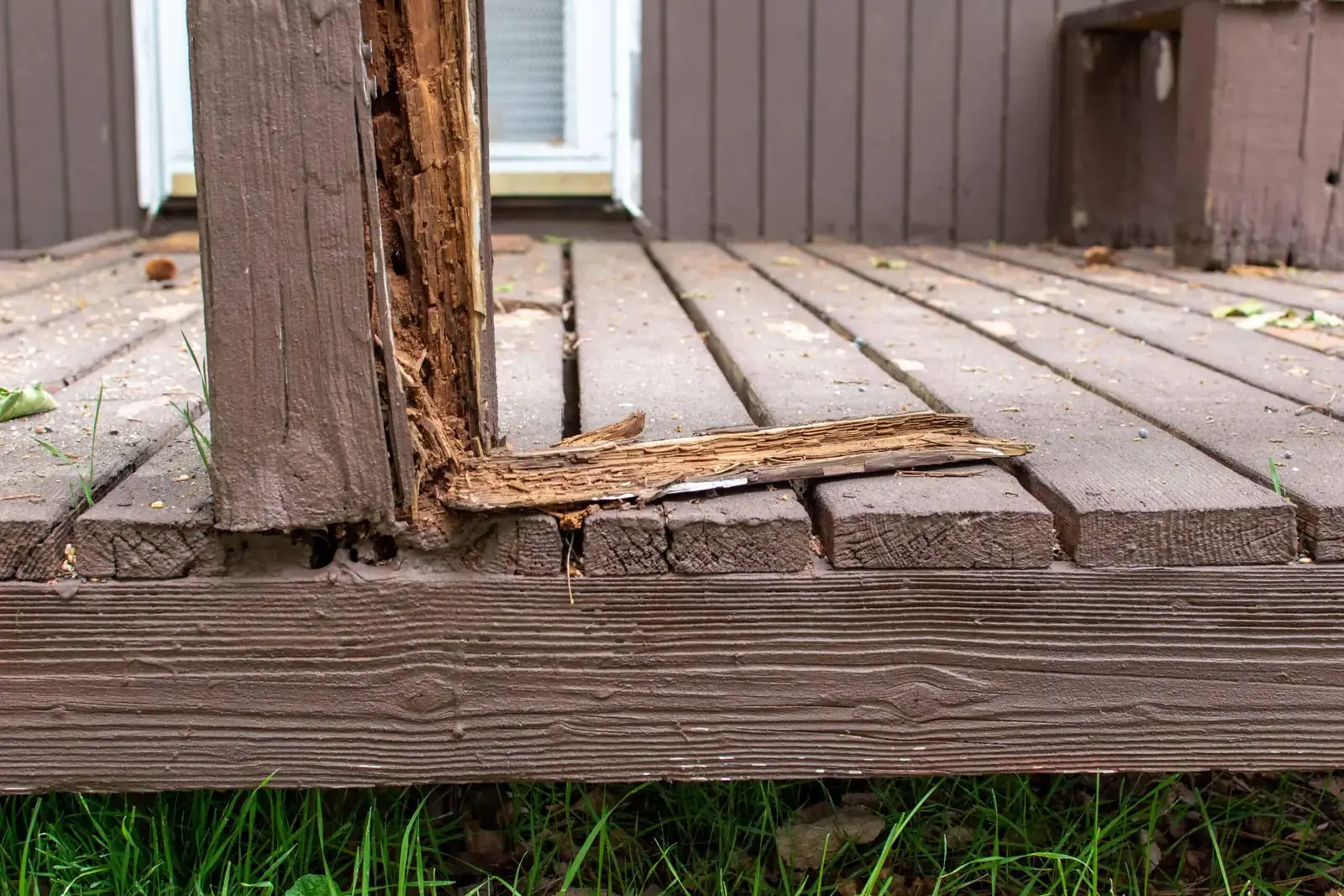
Post bases absorb standing water from deck boards, making lower post sections vulnerable to deep brown rot decay. Brown rot breaks down internal cellulose, causing wood fibers to crumble into square cubical cracks.
If decay damages less than 25 percent of post cross-sections, technicians drill angled port holes into post centers. Injecting low-viscosity structural epoxy consolidants seals internal voids and restores compressive strength to post bases.
Complete Section Replacement Strategy
Deep fungal rot spreading through more than 30 percent of a post demands complete section removal and structural replacement. Attempting to patch severely decayed posts creates life-safety risks along elevated deck edges.
Carpenters support top handrails using temporary bracing before removing damaged posts from rim joist brackets. Installing a new pressure-treated 4×4 or 6×6 post through-bolted into double rim joists restores full lateral load capacity.
Railing Component Repair and Replacement Matrix
| Guardrail Component | Typical Rot Cause | Primary Decay Type | Repair Strategy | Expected Lifespan | Cost Range / Lin. Ft. |
| Post Cap Assemblies | Standing water on top grain | White / Soft Rot | Replace with metal caps | 15 to 20 Years | $10 to $25 |
| Top Handrail Sections | Unsealed end-grain joints | Brown Rot | Epoxy fill or section swap | 10 to 15 Years | $25 to $60 |
| Post Base Connections | Trapped moisture at deck line | Deep Brown Rot | Structural post replacement | 15 to 25 Years | $75 to $150 |
| Intermediate Balusters | Trapped dirt at bottom rails | Soft / Surface Rot | Swap balusters for aluminum | 20+ Years | $15 to $35 |
| Rim Joist Attachments | Corroded carriage bolts | Internal Wet Rot | Replace joist blocking & bolts | 20+ Years | $100 to $250 |
Practical Decision Logic for Repair vs. Replacement How to Manage Deck Railing Rot
Selecting appropriate repair strategies requires evaluating structural load demands, decay depth, and overall frame condition.
Isolated Post Cap Moisture Decay
-
Scrape away soft surface wood fibers down to firm timber using hand scrapers.
-
Saturate exposed end-grain wood with borate fungicide, let dry completely, and install protective powder-coated aluminum post caps.
Deep Internal Post Base Rot
-
Check post base sound by tapping with a brass hammer, listening for dull hollow thuds that indicate internal decay.
-
If internal rot voids exceed one-third of post thickness, remove old post completely and install a new pressure-treated post through-bolted into joists.
Soft Rot along Lower Rail Track
-
Remove soft balusters and cut away decayed sections from lower rail tracks using a plunge saw.
-
Treat remaining sound framing with wood hardener, rebuild missing rail shapes using multi-part epoxy paste, and reinstall new aluminum balusters.
Field Scenarios and Structural Adaptation Realities
Rain-Exposed Oceanfront Decking
Coastal oceanfront decks experience continuous salt spray, high humidity, and intense sun exposure. Moisture trapped behind post mounting brackets creates ideal conditions for hidden wood rot inside post bases.
Contractors remove rusty iron brackets, scrape away soft wood, and soak exposed post ends in borate solutions. Re-anchoring posts using 316-grade stainless steel hardware and non-conductive isolation gaskets prevents future bracket corrosion.
Shaded Forest Floor Platform
Forest platforms under dense tree canopies face low sunlight, slow drying, and heavy leaf drop. Wet leaves resting against lower rail balusters trap moisture, triggering soft rot along bottom wood tracks.
Technicians clear trapped organic debris, cut away decayed rail tracks, and install pre-drilled aluminum bottom rails. Aluminum tracks shed water quickly, eliminating organic rot risks along damp forest deck perimeters.
High-Altitude Severe Alpine Decking
Alpine deck railings endure heavy winter snow accumulation, sub-zero cold, and intense summer UV radiation. Snow melting against wood posts forces water deep into end-grain fibers, where freezing temperatures crack wood faces.
Installers fill freeze-cracks with flexible exterior polyurethane sealants to block meltwater entry. Capping post tops with sloped copper or aluminum caps sheds snow quickly, protecting vulnerable end-grain fibers.
Retrofitting Weathered Substructure Framing
Upgrading old deck railings without replacing underlying rim joists requires thorough substructure rot inspections. Water passing through post mounting holes often decays hidden internal joist blocking.
Carpenters remove soft joist blocking, installing new pressure-treated 2×10 wood blocks using structural lag screws. Sealing new blocking tops with butyl flashing tape prevents water from seeping into fastener holes.
Financial Accounting, Material Logistics, and Labor Dynamics How to Manage Deck Railing Rot
Direct Material and Chemical Expenses
Direct expenses include liquid borate preservatives, wood hardeners, multi-part epoxy resins, stainless steel lag screws, post caps, and lumber. Buying specialized structural epoxies in bulk lowers per-foot restoration costs on larger decks.
Purchasing pre-cut replacement posts and aluminum balusters avoids custom milling fees. Using standard pressure-treated lumber keeps material costs manageable while restoring full structural safety.
Labor Requirements and Field Time Demands
Labor costs depend directly on decay depth, hardware removal difficulty, and structural bracing requirements. Scraping surface rot and applying epoxy fillers takes skilled technicians several hours over multiple drying passes.
Replacing entire support posts requires removing deck boards, installing temporary safety shoring, and through-bolting new posts. Streamlining field workflows keeps overall repair bills manageable for property owners.
Estimated Repair Costs per Linear Foot
| Repair Scope Level | Material Cost / Lin. Ft. | Labor Cost / Lin. Ft. | 5-Year Maintenance Cost | 20-Year Total Investment |
| Surface Rot / Epoxy Patch | $15 to $30 | $25 to $50 | $10 to $20 | $50 to $100 |
| Partial Rail Track Replacement | $25 to $45 | $35 to $65 | $5 to $15 | $65 to $125 |
| Full Post & Rail Replacement | $60 to $110 | $50 to $95 | $5 to $10 | $115 to $215 |
| Substructure Joist Rebuild | $80 to $150 | $75 to $145 | $5 to $10 | $160 to $305 |
Field Repair Tools, Epoxy Resins, and Preservative Treatments
Essential Job-Site Tools
Equipping repair crews with specialized tools speeds up rot removal, improves epoxy adhesion, and ensures post mounts satisfy structural codes.
-
Moisture Meters: Pin-type meters check internal wood moisture content, verifying wood is below 19 percent before epoxies are applied.
-
Oscillating Multi-Tools: Make clean, precise cuts through decayed rail sections without damaging surrounding sound timber.
-
Wood Chisels and Gouges: Scrape away soft, decayed fibers down to solid, healthy wood.
-
Rotary Wire Brushes: Clean loose wood dust from carved repair cavities, improving epoxy mechanical bond strength.
-
Liquid Borate Sprayers: Apply penetrative borate fungicide deep into exposed wood cavities to kill active fungal spores.
-
Low-Viscosity Epoxy Injectors: Force liquid consolidant resins into soft wood fibers, solidifying weakened wood cores.
-
Calibrated Torque Wrenches: Drive replacement post anchor bolts to precise tightness limits, avoiding wood crushing.
Job-Site Restoration Workflows
Following organized repair steps prevents recurring decay and ensures long-lasting structural fixes.
-
Drying Repair Zones: Shield exposed rot cavities with plastic tarps, allowing damp wood to dry below 19 percent moisture content.
-
Carving Soft Fibers: Remove decayed wood until reaching firm, light-colored timber across all repair faces.
-
Applying Borate Fungicides: Saturate exposed timber with liquid borate solutions, letting the wood dry completely for 24 hours.
-
Injecting Epoxy Consolidant: Coat carved cavities with liquid epoxy consolidant to strengthen remaining wood fibers.
-
Packing Structural Epoxy Paste: Fill repair voids with dense two-part epoxy paste, shaping smooth profiles using putty knives.
-
Sanding and Painting: Sand cured epoxy flush with surrounding wood before applying exterior primer and finish paint.
Structural Failure Taxonomy and Decay Progression Modes
Unsealed Post Base Attachment
Attaching timber post bases directly flush onto flat deck boards traps rainwater underneath, causing hidden post rot. Trapped water soaks into vertical post end-grain, feeding internal brown rot fungi.
As internal wood decays, post bases lose resistance against lateral pushing forces. Mounting posts on elevated metal standoff brackets lifts wood end-grain off deck boards, allowing water to drain safely away.
Substructure Attachment Mechanics
Securing vertical posts demands anchoring directly into internal substructure framing to resist lateral leverage forces:
Screwing post base plates through decking boards into an unblocked rim joist allows applied forces to pull fasteners loose, twisting the rim joist and failing safety inspections.
Through-bolting post base plates into a double rim joist backed by solid internal wood blocking transfers applied forces safely into main deck joists.
Trapped Moisture in Flat Rail Tracks
Installing flat top handrails without sloped top faces allows rainwater to pool on upper wood surfaces. Water seeps down into vertical baluster holes, causing hidden rot along lower rail tracks.
Decaying rail tracks allow balusters to pull loose under light hand pressure, creating dangerous perimeter gaps. Installing sloped sub-rails or aluminum baluster channels sheds water quickly and prevents pooling.
Fastener Corrosion and Hole Enlargement
Standard carbon steel screws rust quickly inside moist pressure-treated lumber, forming expanding iron oxide deposits. Expanding rust splits surrounding wood fibers, creating pathways for rainwater to enter post cores.
Enlarged screw holes allow water to pool inside joints, accelerating deep internal decay. Swapping rusty fasteners for stainless steel screws seals hole openings and stops structural wood splitting.
Long-Term Governance, Inspection Protocols, and Adaptation
Annual Structural Safety Audit
Maintaining guardrail safety requires annual inspections to catch early wood rot, loose hardware, or frame movement.
-
Post Base Stability Check: Push firmly against vertical posts to detect base flex, loose anchor bolts, or internal wood rot.
-
Wood Sounding Inspection: Tap posts and top rails with a small brass hammer, listening for hollow thuds that indicate internal decay.
-
Moisture Content Readings: Insert pin moisture meter probes into post bases and joint intersections to confirm wood moisture remains under 19 percent.
-
Infill Gap Clearance: Measure gaps between balusters to confirm spacing remains strictly under four inches to meet building codes.
-
Paint and Sealant Integrity: Inspect paint coatings for cracks, peeling, or water blistering around high-stress joint connections.
Seasonal Preventative Upkeep Routines
Simple seasonal maintenance keeps timber guardrails dry, prevents fungal growth, and extends overall frame service life.
-
Clearing Organic Debris: Sweep away leaves, pine needles, and dirt trapped between bottom rails and deck boards to allow air drying.
-
Re-Sealing End-Grain Joints: Apply water-repellent sealer or exterior paint to exposed end-grain rail cuts every two years.
-
Tightening Structural Anchors: Retighten loose post carriage bolts using socket wrenches to keep frame connections rigid.
-
Touching Up Paint Film: Sand and touch up chipped paint spots immediately to stop rainwater from soaking into raw wood.
Quality Control Metrics, Field Documentation, and Audits
Field Quality Control Checklist
Tracking guardrail repairs provides clear safety documentation for property owners, insurance auditors, and building inspectors.
-
Post Fastener Tightness: Confirm replacement post anchor bolts meet torque specifications, ensuring zero post wobble at joist mounts.
-
Top Rail Deflection Test: Apply firm lateral pressure along top handrails, verifying sections resist bending without loose movement.
-
Infill Spacing Verification: Pass a four-inch sphere between balusters under pressure to verify ongoing child safety compliance.
-
Moisture Meter Logs: Record moisture readings across all repaired post bases, verifying wood remains below 19 percent moisture.
-
Epoxy Bond Integrity: Inspect cured epoxy repairs for hairline edge cracks, confirming full adhesion to surrounding timber.
-
Drainage Clearance Verification: Check that a 3/8-inch air gap remains beneath post bases to allow free water drainage.
Early Warning Signals vs Advanced Failure Indicators
Catching early wood rot prevents expensive structural rebuilds or sudden guardrail failures.
-
Leading Indicators (Early Warning Signs): Minor paint cracking at joints, dark water staining around screw heads, soft surface wood under 1/8-inch deep, and small post base checking. Resolving these issues early prevents deep structural decay.
-
Lagging Indicators (Advanced Failure Signs): Support posts leaning under light hand pressure, dull hollow thuds when tapped, mushrooms growing on wood faces, and sheared anchor bolts. These red flags demand immediate structural repair or full post replacement.
Common Industry Misconceptions and Timber Repair Myths
The Cosmetic Wood Filler Fallacy
Many homeowners assume filling decayed post cavities with standard interior spackle or exterior wood putty fixes structural rot. Standard fillers lack structural strength and fail to bond with moist wood, cracking open after a single seasonal freeze.
The Surface Paint Sealant Myth
Applying thick exterior paint over damp, decayed wood is a common mistake that actually accelerates internal rot. Paint traps moisture inside wood fibers, creating warm, dark conditions where fungal spores thrive behind the unbroken surface paint film.
Universal Pressure-Treated Immunity Myth How to Manage Deck Railing Rot
Assuming pressure-treated lumber is completely immune to fungal rot leads to neglected maintenance. Chemical treatments penetrate outer wood faces, but leave inner heartwood vulnerable to rot whenever carpenters drill or cut framing members on job sites.
Top-Mount Post Standoff Neglect
DIY builders often bolt timber post bases flat onto deck boards without installing raised standoff brackets. Mounting posts flat traps water against bottom end-grain fibers, causing hidden post base rot within a few seasons.
Environmental Material Accounting and Material Lifecycle Dynamics
Lifecycle Carbon and Production Footprint
Evaluating wood restoration options involves assessing environmental impacts across material harvesting, chemical treatments, and disposal phases.
-
Restoring Existing Timber: Repairing sound framing with epoxy resins avoids tree harvesting and keeps old lumber out of landfills.
-
Pressure-Treated Wood Disposal: Preservative-treated lumber requires proper disposal at approved landfills and must never be burned outdoors.
-
Preservative Chemical Runoff: Using copper and borate treatments protects timber, but requires careful application to avoid soil contamination.
Structural Safety and Long-Term Value
Architects, building contractors, and homeowners share a responsibility to maintain perimeter guardrails that prioritize user safety and material longevity. Skipping rot repairs, using cosmetic fillers on structural posts, or ignoring loose mounting bolts creates serious fall hazards along elevated platforms. Following engineered restoration guidelines ensures outdoor living spaces remain safe, functional, and visually appealing for decades.
Structural Synthesis and Final Engineering Recommendations
Successfully understanding how to manage deck railing rot requires accurate decay diagnosis, thorough moisture control, and correct structural repair selection. Treating deck perimeters as engineered life-safety barriers ensures reliable performance without wasting money on temporary cosmetic patches.
Carving away decayed wood fibers, treating cavities with glycol borate fungicides, and rebuilding missing shapes with structural epoxy resins restores localized rot Pockets efficiently. When fungal decay damages more than 30 percent of a post cross-section, replacing the entire post through-bolted into joists is necessary to restore full structural strength.
By installing elevated post standoff brackets, sealing exposed end-grain cuts, maintaining protective paint films, and conducting annual safety audits, property owners can eliminate wood rot risks and keep deck railings safe and stable for decades of outdoor use.