How to Avoid Deck Railing Wobbling: Engineering & Mounting Guide
Achieving absolute structural rigidity in exterior elevated barriers requires a thorough understanding of mechanical leverage, substructure blocking, and fastener tension. Guardrail posts function as vertical cantilever beams that convert outward pushing forces into rotational forces at their base connections. How to Avoid Deck Railing Wobbling. These amplified rotational forces concentrate along the rim joist attachment zone, making improper hardware or weak blocking immediately apparent through loose wiggling.
Guardrails serve as critical life-safety barriers on elevated decks, demanding strict structural stiffness to protect users from dangerous fall hazards. Simply tightening surface deck screws or adding cosmetic wood shims behind loose post bases provides temporary relief without solving internal framing weaknesses. Ensuring long-term post stability requires transferring leverage loads deep into the main floor joists through heavy-duty structural hardware and solid timber blocking.
Preventing structural post deflection involves evaluating timber compression, fastener shearing resistance, rim joist twisting, and sub-deck reinforcement details. Understanding how rotational forces move through vertical support posts allows carpenters and property owners to eliminate post movement and preserve perimeter guardrail safety over long service lives.
Understanding “how to avoid deck railing wobbling”
Mechanical Physics and Cantilever Mechanics
Learning how to avoid deck railing wobbling requires analyzing cantilever leverage, fastener tension, and rim joist deflection mechanics rather than relying on surface shims. Outward lateral forces applied along the top handrail generate rotational leverage at the post base connection.
Allowing single rim joists to flex without internal blocking creates loose post movement under light hand pressure. Preventing post deflection requires installing solid timber blocking, through-bolting post bases, and transferring lateral loads into internal deck joists.
Structural Codes and Load Testing Standards
Residential building codes require deck guardrails to withstand a 200-pound concentrated load applied in any direction along the top rail. Vertical support posts must transfer this concentrated force safely down through the base connection without exceeding maximum deflection limits.
Surface screws driven into thin deck boards fail under structural load testing because wood fibers crush under high leverage forces. Installing heavy-duty tension ties and structural lag screws anchors posts firmly into internal framing, satisfying safety codes.
Long-Term Framing Stability and Wood Compression
Securing guardrail posts demands accounting for seasonal wood shrinkage, fastener stretching, and wood fiber compression over time. Pressure-treated timber shrinks as moisture evaporates, creating minor play around post mounting bolts.
Delaying hardware retightening allows minor play to develop into structural post movement, loosening lag bolts and cracking surrounding wood fibers. Using spring lock washers and heavy structural washers maintains constant bolt tension despite natural timber dimensional shifts.
Historical Evolution of Perimeter Guardrail Anchorage
Early Surface Nailing Practices and Framing Failures
Historically, deck builders attached guardrail posts by face-nailing 4×4 posts directly onto the outside face of single rim joists. Carpenters used smooth shank framing nails driven into raw end-grain lumber, relying entirely on nail shear strength to hold posts upright.
As moisture repeatedly entered open nail holes, framing lumber expanded and contracted, loosening smooth nail shanks within the wood fibers. Under routine pushing forces, vertical posts pulled away from rim joists, creating loose wiggling and serious safety hazards.
Development of Carriage Bolts and Surface Notch Defects
The building industry transitioned to securing posts using 1/2-inch steel carriage bolts, significantly improving pull-out resistance over smooth nails. However, carpenters frequently cut deep notches into 4×4 post bases to fit posts neatly over exterior deck board edges.
Notching post bases reduced a 4×4 post’s solid structural cross-section by almost 50 percent along the high-stress attachment zone. Concentrated leverage forces caused notched posts to split horizontally along wood grain lines, resulting in sudden post structural failures.
Modern Engineered Tension Ties and Structural Fasteners
Modern deck engineering prohibits cutting structural post bases and requires advanced load-transfer hardware to secure guardrails. Engineered structural screws, tension tie brackets, and heavy-duty hold-downs tie vertical posts directly into main deck joists.
Advanced structural lag screws replace standard carriage bolts, offering high shear capacity without requiring clearance holes drilled through joists. Modern framing codes require post connections to distribute rotational leverage across multiple framing members, ensuring rigid structural stability.
Mechanical Forces, Structural Physics, and Deflection Dynamics
Rotational Leverage and Force Amplification
Pushing outward against the top handrail creates a rotational moment that amplifies forces at the post base.
A 200-pound lateral force applied at a 36-inch handrail height exerts 600 foot-pounds of rotational moment on the post attachment zone.
Solid joist blocking is required to withstand this amplified rotational force and prevent the rim joist from twisting.
Timber Fiber Compression and Fastener Play
High leverage forces press post edges against soft rim joist fibers, crushing wood cells over time.
Crushed wood fibers create small internal gaps around fastener shanks, allowing posts to tilt outward under hand pressure.
Installing thick steel backing plates spreads leverage loads over wider wood surface areas, preventing localized fiber crushing.
Rim Joist Torsional Twisting
Unreinforced rim joists twist outward along their top edge when lateral forces push against attached guardrail posts.
Twisting rim joists allow vertical posts to lean outward even if base bolts remain tight inside the wood holes.
Adding perpendicular joist blocking behind post locations stops rim joist twisting and holds posts firmly upright.
Post Connection Variations, Structural Methods, and Trade-Offs
Surface-Mounted Metal Post Base Plates
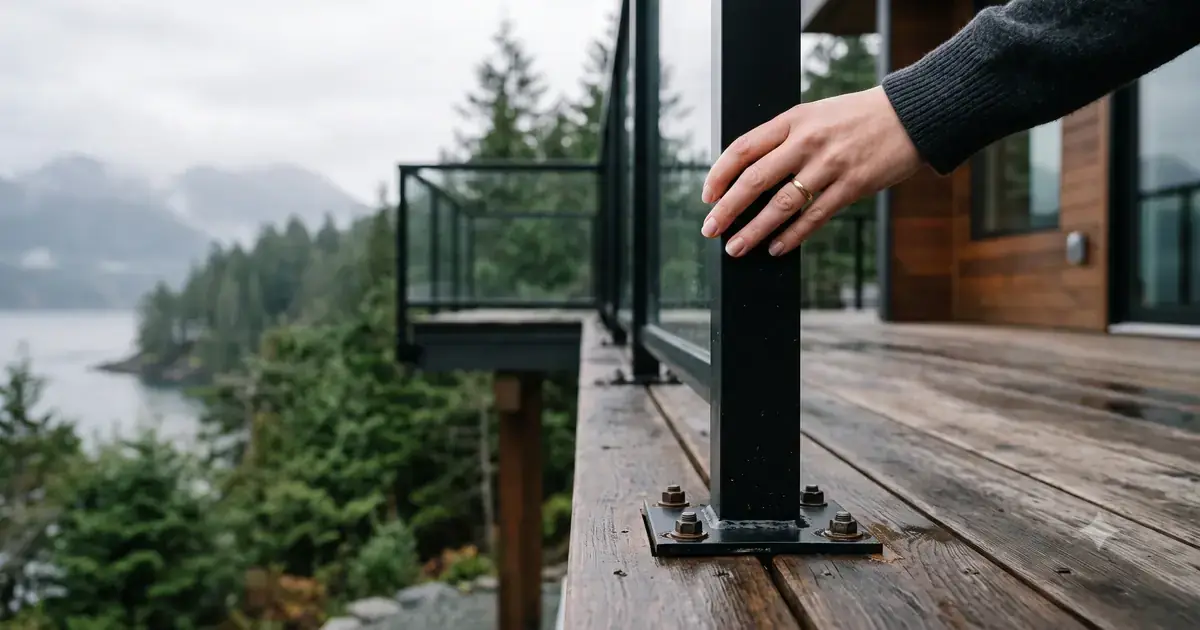
Surface base plates allow builders to mount metal or composite posts directly onto finished deck boards using structural anchor screws. Powder-coated aluminum or stainless steel base plates contain pre-drilled corner holes for driving long fasteners into substructure framing.
Installers must position solid wood blocking directly beneath deck boards to receive all four base plate anchor screws. While surface plates speed up job-site installation, installer errors like missing internal joist blocking lead to loose post wiggling.
Inside-Rim Through-Bolted Post Framing
Mounting wooden posts along the inside face of outer rim joists provides exceptional leverage resistance when properly blocked. Positioned inside the frame perimeter, posts press directly against internal rim joists and perpendicular floor joists.
Carpenters secure posts using 1/2-inch hot-dipped galvanized or stainless steel carriage bolts fitted with thick structural washers. Adding solid wood backing blocks behind posts distributes leverage forces across adjacent joist bays, creating a rock-solid guardrail structure.
Structural Fascia-Mounted Post Systems
Fascia-mounted post brackets anchor vertical posts to the exterior face of outer rim joists, maximizing usable deck floor space. Heavy-duty steel brackets wrap around rim joists, securing posts with structural lag screws driven into internal joist blocking.
Fascia brackets expose mounting hardware to weather, requiring corrosion-resistant stainless steel or hot-dipped galvanized fasteners. Installing internal corner blocking prevents outer rim joists from bowing outward under heavy lateral loads.
Post Connection Method Structural Comparison
| Mounting Strategy | Installation Speed | Leverage Resistance | Usable Deck Space | Long-Term Upkeep | Cost Range / Post |
| Surface Base Plate | Fast | Moderate | Preserved | Low | $35 to $75 |
| Inside-Rim Bolted | Moderate | Very High | Slightly Reduced | Low | $20 to $45 |
| Fascia Bracket Mount | Slow | High | Maximized | Moderate | $50 to $110 |
| Flush Rim Mortise | Very Slow | Low | Preserved | High | $60 to $130 |
| Direct Post-to-Joist | Moderate | Exceptional | Maximized | Low | $25 to $50 |
Practical Decision Logic for Rigid Post Anchorage
Selecting appropriate post mounting methods requires evaluating framing depth, structural load requirements, and desired deck layout aesthetics.
Standard Inside-Rim Post Attachment
-
Fit pressure-treated 4×4 posts into inside corners created by rim joists and adjacent floor joists.
-
Install double 2×10 wood blocking behind posts, securing blocks with structural screws driven through neighboring joists.
-
Drive two 1/2-inch carriage bolts with structural washers through joists and posts, tightening nuts until washers press firmly into wood.
Surface Mounting Metal Posts on Composite Decking
-
Position solid 3×10 wood blocking directly beneath deck board mounting locations to receive base plate screws.
-
Drill clearance holes through composite deck boards to prevent board mushrooming when driving heavy anchor screws.
-
Secure base plates through deck boards into solid blocking using 3/8-inch structural lag screws, verifying posts remain plumb.
Fascia-Mounting Posts to Maximize Space
-
Add full-depth 2×10 joist blocking behind outer rim joists at all post locations using structural framing angles.
-
Attach heavy-duty steel fascia brackets to outer rim joists using 1/2-inch structural lag screws driven into internal blocking.
-
Insert vertical support posts into fascia brackets, tightening clamp bolts to lock posts firmly in place.
Practical Job-Site Scenarios and Structural Adaptation
Retrofitting Loose Posts on Existing Decks
Aged residential decks often develop loose guardrail posts due to corroded carriage bolts and missing internal joist blocking. Property owners notice posts leaning outward when pushed, exposing perimeter fall hazards along elevated deck edges.
Carpenters remove loose original bolts, install double 2×10 joist blocking behind posts, and secure blocks with structural framing screws. Installing tension tie brackets between posts and internal floor joists locks posts firmly, eliminating wiggling without replacing posts.
High-Wind Coastal Deck Installations
Coastal decks endure severe wind pressures that push continuously against solid glass or wood guardrail panels. Continuous wind vibrations loosen standard mounting screws, causing surface-mounted post base plates to wiggle over time.
Contractors install heavy-duty steel fascia mounting brackets secured with marine-grade 316 stainless steel through-bolts. Backing mounting zone rim joists with double blocking prevents frame flexing under intense coastal wind storms.
Installing Guardrails on Low-Profile Decks
Low-profile platforms built close to ground levels require guardrail posts anchored to shallow 2×6 or 2×8 floor joists. Shallow joists offer limited vertical depth for bolt spacing, increasing leverage forces along the base mounting zone.
Installers attach engineered steel tension hold-down brackets to bottom post ends, anchoring them deep into main floor joists. Transferring leverage forces horizontally along floor joists provides structural stability despite shallow rim joist depth.
Structural Upgrades for Cable Railing Tension
Horizontal cable railing systems exert continuous inward pulling forces on end posts, causing unreinforced corner posts to tilt inward. Tilting corner posts causes cable lines to sag, failing safety inspections and compromising perimeter safety.
Carpenters install double 4×4 corner posts tied together with horizontal wood blocking and heavy steel angle brackets. Reinforcing corner post framing withstands high cable tension forces without bending or tilting inward over time.
Cost Dynamics, Labor Allocation, and Resource Accounting
Direct Material and Hardware Investment
Hardware costs include structural lag screws, 1/2-inch carriage bolts, tension tie brackets, thick steel washers, framing angles, and lumber blocking. Purchasing structural framing hardware in bulk lowers overall reinforcement costs on large deck builds.
Buying heavy-duty tension ties and stainless steel fasteners increases upfront hardware costs, but prevents future frame repairs. Using standard zinc-plated hardware risks rapid corrosion in pressure-treated wood, leading to early component failure.
Field Labor Demands and Installation Complexity
Labor expenses depend directly on post connection accessibility, substructure blocking needs, and retrofit framing requirements. Adding solid joist blocking and drilling through-bolts takes skilled carpenters additional time during frame construction.
Retrofitting loose posts on finished decks requires removing deck boards or working underneath framing, increasing labor hours. Investing in proper blocking during initial frame construction avoids expensive future repair bills.
Estimated Post Anchorage Costs per Attachment Location
| Anchorage Scope Level | Material Expense / Post | Labor Expense / Post | 5-Year Maintenance Cost | 20-Year Total Investment |
| Basic Carriage Bolt (No Blocking) | $10 to $20 | $20 to $35 | $15 to $30 | $45 to $85 |
| Inside-Rim Mount + Blocking | $25 to $45 | $35 to $60 | $0 to $10 | $60 to $115 |
| Tension Tie + Double Blocking | $45 to $85 | $50 to $90 | $0 to $10 | $95 to $185 |
| Fascia Bracket + Full Retrofit | $75 to $140 | $65 to $120 | $5 to $15 | $145 to $275 |
Structural Fasteners, Reinforcement Systems, and Support Tools
Essential Framing and Anchorage Tools
Equipping framing crews with specialized structural tools speeds up hardware installation, improves bolt clamping force, and eliminates post movement.
-
Impact Wrenches: Drive heavy structural lag screws quickly into solid wood blocking without stripping fastener heads.
-
Extra-Long Aircraft Drill Bits: Drill clean, straight 1/2-inch clearance holes through thick posts and double joist blocking.
-
Torque Wrenches: Tighten carriage bolt nuts to exact torque limits, ensuring proper clamping pressure without crushing wood fibers.
-
Structural Framing Clamps: Hold posts firmly plumb against rim joists while drilling bolt holes or driving lag screws.
-
Digital Post Levels: Check vertical post plumb simultaneously along two faces before tightening permanent mounting hardware.
-
Pry Bars and Framing Chisels: Notch rim joists or adjust blocking alignment during tight retrofit installations.
-
Reciprocating Saws: Cut away corroded old bolts or damaged framing during post repair projects.
Step-by-Step Job-Site Anchorage Workflows
Following organized job-site installation steps prevents loose post movement and ensures long-lasting guardrail stiffness.
-
Positioning Support Posts: Clamp 4×4 posts vertically against inside faces of rim joists, verifying posts remain plumb.
-
Installing Internal Blocking: Fit 2×10 wood blocks behind posts, securing them through neighboring joists with structural lag screws.
-
Drilling Bolt Holes: Drill 1/2-inch clearance holes through joists, posts, and blocking using long drill bits.
-
Inserting Structural Bolts: Push hot-dipped galvanized carriage bolts through holes, adding thick structural washers and nuts inside.
-
Attaching Tension Tie Brackets: Mount structural tension ties to lower post ends, anchoring brackets horizontally into main floor joists.
-
Torquing Fasteners: Tighten all nuts and structural screws firmly using torque wrenches until washers sit flush against wood faces.
Structural Failure Taxonomy and Loose Railing Mechanics
Missing Internal Joist Blocking
Mounting guardrail posts directly to outer rim joists without internal blocking is a major framing mistake in deck construction. Pushing against posts forces single rim joists to flex inward, causing posts to wiggle under light hand pressure.
Over time, repeated leverage forces pull mounting screws loose and split rim joist top edges. Installing perpendicular wood blocking behind posts transfers leverage loads across multiple joists, holding posts firmly upright.
Substructure Attachment Mechanics
Securing vertical posts demands anchoring directly into internal substructure framing to resist lateral leverage forces:
Screwing post base plates through decking boards into an unblocked rim joist allows applied forces to pull fasteners loose, twisting the rim joist and failing safety inspections.
Through-bolting post base plates into a double rim joist backed by solid internal wood blocking transfers applied forces safely into main deck joists.
Over-Countersinking Fastener Heads
Driving lag screws or carriage bolts too deep into soft framing lumber crushes surface wood fibers beneath fastener heads. Crushed wood fibers weaken fastener holding power, allowing bolts to loosen under routine leverage loads.
Using thick structural steel washers under bolt heads spreads clamping pressure across wider surface areas. Wide washers prevent fastener heads from digging into wood, preserving joint tightness.
Wood Drying Shrinkage and Loose Hardware
Pressure-treated lumber contains high moisture levels when installed, shrinking naturally as wood dries out over its first season. Shrinkage reduces wood thickness around post bolt holes, creating minor play between posts, joists, and washers.
Unchecked play allows posts to tilt outward when pushed, accelerating fastener hole enlargement. Retightening post mounting bolts after the first dry season restores bolt tension and eliminates structural wiggling.
Long-Term Monitoring Protocols, Maintenance Cycles, and Governance
Annual Guardrail Rigidity Inspection
Maintaining guardrail stiffness requires annual inspections to catch loose bolts, wood shrinkage, or framing movement early.
-
Lateral Push Stiffness Check: Apply firm outward pressure along top handrails at every post location to check for post deflection.
-
Fastener Tightness Audit: Inspect visible carriage bolts and structural lag screws, retightening nuts loosened by wood shrinkage.
-
Wood Grain Crack Survey: Check post bases for vertical grain splitting or horizontal cracks around mounting bolt holes.
-
Joist Blocking Verification: Inspect substructure blocking from underneath deck framing to confirm blocks remain securely attached.
-
Rust and Corrosion Check: Inspect metal brackets, bolts, and washers for surface rust that could weaken fastener holding capacity.
Seasonal Hardware Maintenance Routines
Simple seasonal maintenance keeps post connections tight, prevents hardware rust, and extends overall guardrail service life.
-
Retightening Post Bolts: Tighten loose carriage bolt nuts using socket wrenches to eliminate minor post wiggling caused by wood shrinkage.
-
Clearing Debris around Bases: Clean away trapped leaves and dirt from post base connections to allow wood to dry thoroughly.
-
Sealing Exposed End-Grain: Apply water-repellent sealer to exposed post tops and base cuts to prevent moisture splitting.
-
Touching Up Metal Coatings: Spray corroded bolt heads or bracket edges with rust-inhibiting primer to stop metal corrosion.
Structural Audits, Field Metrics, and Connection Logs How to Avoid Deck Railing Wobbling
Field Quality Control Checklist
Documenting post connection details tracks structural performance over time, providing safety records for building inspectors and property owners.
-
Post Bolt Torque Verification: Confirm all carriage bolts meet recommended torque specs, ensuring tight clamping force against joists.
-
Top Rail Deflection Limits: Verify top rail sideways movement remains well under code limits under firm hand pressure.
-
Structural Washer Presence: Confirm thick steel washers are installed beneath every bolt head and nut to prevent wood crushing.
-
Tension Tie Attachment: Inspect horizontal tension ties, verifying brackets anchor post bases directly into main floor joists.
-
Joist Blocking Fastener Count: Check that internal joist blocking is secured with the correct number of structural framing screws.
-
Clearance Hole Precision: Confirm bolt holes were drilled no more than 1/16-inch larger than bolt diameters to prevent internal slop.
Early Warning Signals vs Advanced Failure Indicators
Catching early post movement prevents structural hardware failures and expensive framing repairs.
-
Leading Indicators (Early Warning Signs): Slight post movement under heavy pushing, minor gaps under bolt washers, hair-thin wood drying cracks near bolts, and squeaking noises when leaning on top rails. Resolving these minor issues early restores full post rigidity.
-
Lagging Indicators (Advanced Failure Signs): Posts leaning outward permanently, visible rim joist twisting, enlarged oval bolt holes, split post bases, and rusted carriage bolts. These serious failure signs demand immediate structural repairs or complete post replacement.
Structural Misconceptions and Railing Attachment Myths
Surface Decking Anchorage Myth
A common misconception is assuming driving long screws through surface deck boards into posts provides sufficient post stiffness. Surface deck boards lack structural thickness and flex easily under leverage forces, offering minimal lateral post support.
The Over-Tightened Bolt Fallacy
Many DIY builders believe cranking carriage bolts as tight as possible with long cheater pipes fixes loose posts permanently. Over-tightening crushes internal wood fibers completely, weakening wood grain structure and accelerating long-term bolt loosening.
Structural Post Notching Fallacy
Notching 4×4 post bases to fit neatly over deck board edges was once common practice, but it severely weakens structural posts. Notching concentrates high leverage forces along reduced wood sections, causing posts to split horizontally under heavy loads.
Short Screw Attachment Fallacy
Using standard 3-inch deck screws to anchor surface post base plates into rim joists fails structural safety codes. Standard deck screws lack necessary shear strength and pull out easily under rotational leverage forces exerted against guardrails.
Materials Accounting and Long-Term Structural Stewardship
Environmental Footprint and Material Lifecycle
Evaluating guardrail framing options involves assessing environmental impacts across material manufacturing, treated lumber usage, and hardware durability.
-
Pressure-Treated Wood Stewardship: Using sustainably harvested treated pine for posts and blocking sequesters carbon over long service lives.
-
Recyclable Steel Hardware: Steel carriage bolts, tension ties, and structural lag screws are fully recyclable at the end of their service life.
-
Preventing Premature Replacement: Building rigid post connections prevents early material failures, keeping construction waste out of landfills.
Structural Safety and Long-Term Value
Architects, framing contractors, and property owners share a responsibility to build perimeter guardrails that prioritize user safety and structural stiffness. Skipping internal joist blocking, using undersized fasteners, or notching support posts creates serious fall hazards along elevated platforms. Following engineered post anchorage methods ensures outdoor living spaces remain safe, functional, and wobble-free for decades.
Engineering Synthesis and Final Framing Recommendations
Successfully understanding how to avoid deck railing wobbling requires proper post attachment methods, solid internal joist blocking, and heavy-duty structural hardware. Treating guardrails as engineered cantilever systems ensures rigid structural performance without relying on temporary surface shims.
Combining inside-rim post mounting with double 2×10 joist blocking and 1/2-inch carriage bolts provides exceptional leverage resistance against lateral pushing forces. Adding engineered tension tie brackets transfers rotational leverage forces horizontally into main floor joists, eliminating post wiggling entirely.
By avoiding post base notches, installing thick structural washers, retightening hardware after initial wood drying, and conducting annual rigidity audits, property owners can ensure deck railings remain solid, safe, and code-compliant over decades of continuous use.